 blog
Best Native Plants for Albuquerque in 2026
Table of Contents
- Why Native Plants Thrive in Albuquerque's High Desert
- Best Native Plants for Albuquerque in 2026
- Drought-Resistant Landscaping Ideas That Work Here
- How to Design a Xeriscape Garden for Your Yard
- Pollinator-Friendly Plants for High Desert Gardens
- Soil, Water, and Maintenance for Native Plants
- Common Mistakes When Planting Natives in Albuquerque
- Mistake 1: Converting turf to native in a single weekend
- Mistake 2: Planting in summer instead of fall
- Mistake 3: Skipping soil drainage improvements
- Mistake 4: Mixing high-water and low-water plants in the same irrigation zone
- Mistake 5: Removing all dead material in fall
- Mistake 6: Expecting instant fullness instead of letting plants spread
- Mistake 7: Ignoring pest and disease pressure until it's a crisis
- Mistake 8: Treating new construction soil like established soil
- Conclusion
- Frequently Asked Questions
Last Updated: September 26, 2026
Why Native Plants Thrive in Albuquerque's High Desert
Native plants succeed in Albuquerque because they evolved here. Species adapted to the Chihuahuan Desert tolerate alkaline soil, intense sun, and months of minimal rainfall without the intervention non-native turf demands.
Best Native Plants for Albuquerque in 2026
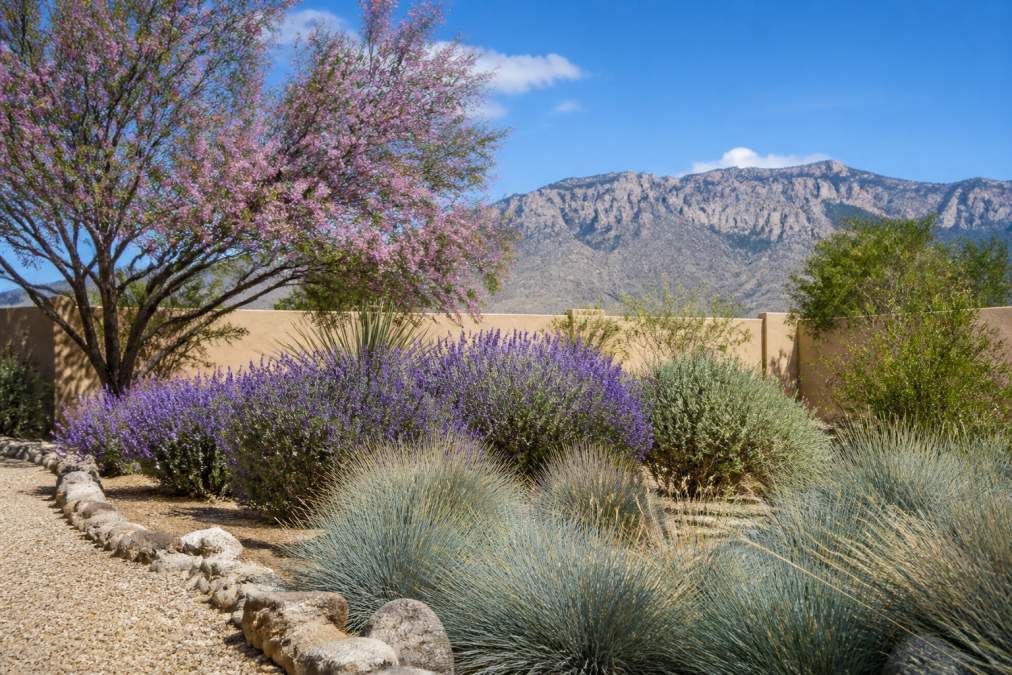
The best native plants for Albuquerque in 2026 fall into three groups: trees for shade and structure, flowering shrubs and perennials for seasonal color, and grasses and ground cover for texture and erosion control. Choosing across all three creates a layered landscape that looks designed, not random.
Native Trees for Shade and Structure
Desert willow tops most lists: trumpet-shaped blooms through summer and almost no care once established. New Mexico olive works as a small shade tree or privacy screen and handles reflected heat from walls and pavement. For larger lots, velvet mesquite offers filtered shade and fixes nitrogen, improving conditions for everything beneath it.
Flowering Shrubs and Perennials
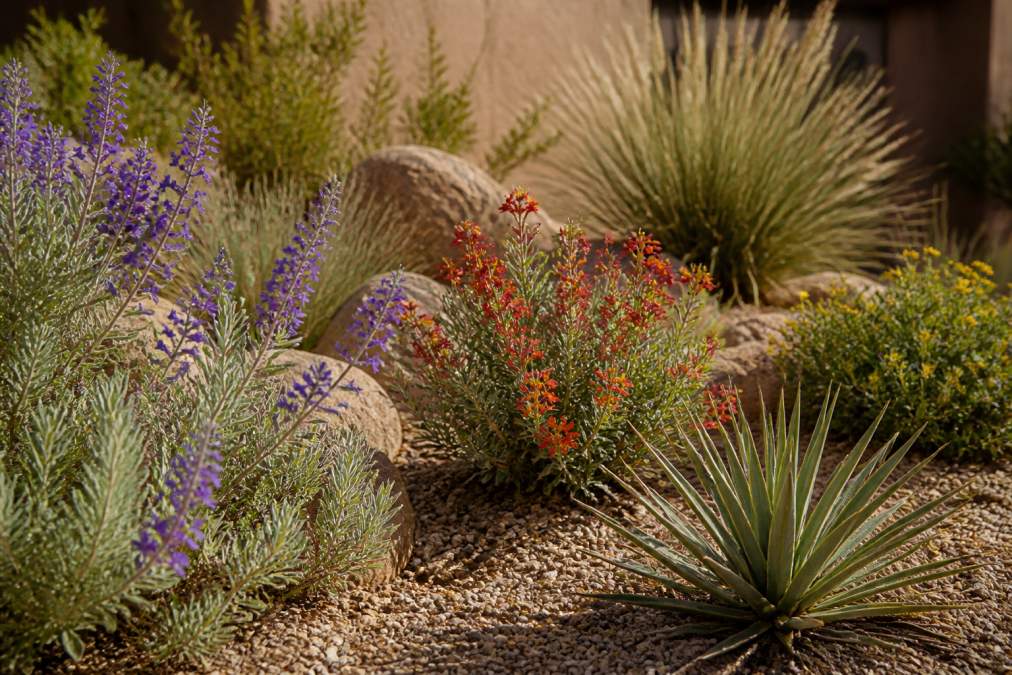
Purple sage is the workhorse of high desert landscaping: compact, full-sun tolerant, and fragrant after rain. Fernbush produces white flower spikes in midsummer when little else blooms. For perennials, consider penstemon, blanket flower, and blackfoot daisy, all bloom reliably, attract pollinators, and return yearly without supplemental water once mature.
Native Grasses and Ground Cover
Blue grama grass gives you the look of a lawn without the water bill: dense clumps, golden in winter, mowed only a few times per season. For ground cover, try trailing four o'clock or sand verbena, both spread across bare soil and suppress weeds while slower shrubs fill in.
| Plant Type | Best Species | Sun Needs | Water Once Established |
|---|---|---|---|
| Shade tree | Desert willow, velvet mesquite | Full sun | Very low |
| Flowering shrub | Purple sage, fernbush | Full sun | Very low |
| Perennial | Penstemon, blanket flower | Full sun | Low |
| Grass | Blue grama | Full sun | Very low |
| Ground cover | Trailing four o'clock | Full sun to part shade | Low |
Drought-Resistant Landscaping Ideas That Work Here
Drought-resistant landscaping succeeds when you group plants by water need rather than scattering species randomly: put the thirstiest plants in one zone near the house and let outer zones rely on rainfall alone. This is the foundation of xeriscaping, and it cuts irrigation waste dramatically.
Hydrozoning by water need, not by plant type
Divide your yard into three zones:
- Zone 1 (highest water): Within 10 feet of the house, where roof runoff and eaves shade concentrate moisture. Put species needing occasional supplemental water here, desert willow, New Mexico olive, and penstemon.
- Zone 2 (moderate): The mid-yard transition area. Purple sage, fernbush, and blanket flower thrive here with deep watering every two to three weeks during the hottest stretch.
- Zone 3 (rainfall only): The outer perimeter and sloped areas. Blue grama, sand verbena, and trailing four o'clock survive on natural precipitation once established, though they need help through their first summer.
The mistake is mixing a Zone 1 plant into Zone 3 because it looked good at the nursery. It will die, and you'll blame the plant instead of the placement.
Replace turf in strips, not in one weekend
Full turf removal is the highest-impact drought move, but doing it at once exposes bare soil to wind and sun, kills soil biology, and leaves a dust bowl for a season. Instead, strip-convert: remove turf in 4- to 6-foot bands, plant them immediately with native species, and leave the remaining turf as a temporary weed barrier.
Match mulch to micro-climate, not to fashion
Gravel and crushed stone mulch reduce evaporation and reflect heat, which is why they're standard in desert landscaping. But they raise soil temperature by several degrees, stressing shallow-rooted perennials. In shaded north-facing beds, coarse organic mulch, wood chips or composted bark, holds moisture longer and feeds soil biology, though it needs annual topping off.
Use boulders and berms to create shade and water capture
A boulder on the south or west side of a bed casts shade part of the day, lowering soil temperature and water loss. A berm raises plants above poorly drained ground and directs runoff toward their root zones. Both are cheap, permanent, and visually anchor a xeriscape so it reads as designed.
Install drip irrigation on separate valves per hydrozone
A single valve for the whole yard forces you to water everything on the same schedule, which defeats the purpose of hydrozoning. Separate valves let you run Zone 1 twice a month and Zone 3 never, after establishment. Add a smart controller that adjusts run times based on local evapotranspiration data, the [U.S.
Choose species by provenance, not by label
"Drought-tolerant" is a marketing term, not a guarantee. A plant labeled drought-tolerant in a coastal nursery may still need regular water here. Look for species native to the Chihuahuan Desert or cultivars selected from local populations, those survive a July without irrigation once established.
How to Design a Xeriscape Garden for Your Yard
A xeriscape garden is designed around water efficiency, using native and desert-adapted plants, efficient irrigation, and soil improvements to thrive on minimal supplemental water. Design it in layers: trees at the back, shrubs in the middle, perennials and ground cover at the front.
Then follow this sequence:
- Improve soil drainage in planting beds before anything goes in the ground
- Group plants by water need into hydrozones
- Install drip irrigation with separate valves per zone
- Plant in fall so roots establish before summer
- Add mulch to lock in moisture and suppress weeds
- Leave gaps for plants to spread naturally over two to three seasons
Pollinator-Friendly Plants for High Desert Gardens
Pollinator-friendly plants for high desert gardens need to bloom across multiple seasons, not just spring. Bees, butterflies, and hummingbirds rely on a continuous food source from early spring through fall, and native species evolved alongside them to provide exactly the nectar and pollen local populations need.
Soil, Water, and Maintenance for Native Plants
Alkaline soil defines gardening here. Most Albuquerque yards sit on high-pH soil, which locks up certain nutrients and stresses acid-loving plants. Native species evolved with this chemistry and handle it; non-natives often don't.
Common Mistakes When Planting Natives in Albuquerque
The biggest mistake is treating native plants like conventional garden center stock. They don't need rich soil, frequent watering, or fertilizer, give them those things and they decline. But the errors that actually kill native gardens in their first season are more specific, and most guides don't cover them.
Mistake 1: Converting turf to native in a single weekend
Ripping out the entire lawn at once exposes bare soil to wind and sun, kills the soil biology native plants depend on, and leaves a dust bowl for a season. Instead, strip-convert: remove turf in 4- to 6-foot bands, plant them immediately, and leave the remaining turf as a temporary weed barrier.
Mistake 2: Planting in summer instead of fall
Fall planting gives roots time to establish before the first brutal summer. Planting in June and overwatering to compensate drowns the roots. The first season is the only one requiring real attention, water new plantings through their first summer, then taper off.
Mistake 3: Skipping soil drainage improvements
Alkaline soil defines gardening here: most yards sit on high pH, which locks up nutrients and stresses acid-loving plants, though native species evolved with this chemistry. Poor drainage is a separate problem. If water pools after rain, amend with compost and coarse material, or plant on slight mounds so water moves away from crowns.
Mistake 4: Mixing high-water and low-water plants in the same irrigation zone
A single valve forces you to water everything on the same schedule, defeating hydrozoning. Separate valves let you run the thirstier zone twice a month and the rainfall-only zone never, after establishment. This is a common irrigation design error in established native gardens.
Mistake 5: Removing all dead material in fall
Many native bees nest underground or in hollow stems, and butterflies overwinter in leaf litter. Cleaning up every dead stem and leaf in fall destroys those sites. Leave some bare soil and dead stems through winter, cutting back only what's necessary for appearance or disease control, one of the few tasks where doing less is better.
Mistake 6: Expecting instant fullness instead of letting plants spread
Native plants take two to three seasons to fill in. Leave gaps for them to spread naturally and resist overplanting, which causes competition for water and nutrients and forces you to thin anyway. A landscape that looks sparse in year one will look intentional by year three.
Mistake 7: Ignoring pest and disease pressure until it's a crisis
Pest problems in native gardens can be predictable. Aphids may cluster on penstemon and blanket flower in spring; spider mites can thrive in hot, dry conditions and show up as stippled leaves on purple sage and fernbush. Root rot is often caused by overwatering, not a pathogen.
Mistake 8: Treating new construction soil like established soil
New construction yards present a special challenge: graded soil is often compacted and low in organic matter, so native plantings need more upfront soil work than an established yard. Compacted soil prevents roots from penetrating, and no amount of watering fixes a root system that can't grow.
Conclusion
Converting a yard to native plants takes patience, but the payoff is a landscape that survives heat, saves water, and looks better every year. Match species to your soil and micro-climates, then resist the urge to overwater.
Frequently Asked Questions
What are the easiest native plants to grow in Albuquerque?
Blue grama grass, purple sage, and desert marigold are among the easiest native plants for Albuquerque yards. They tolerate alkaline soil, need little water once established, and handle full sun exposure without fuss. Native trees like desert willow and New Mexico olive also perform well with minimal care. Start with these species if you want a low-maintenance landscape that survives the high desert climate reliably.
Do native plants require less maintenance than non-native species?
Yes, native plants generally need less water, fertilizer, and pest control than non-native species once established. They evolved in local soil and climate conditions, so they handle drought and temperature swings naturally. You will still need to water them during the first year or two while roots develop, and occasional pruning keeps shrubs tidy. After establishment, maintenance drops significantly compared to traditional lawns.
When is the best time to plant native species in Albuquerque?
Fall is the ideal time to plant native species in Albuquerque. Cooler temperatures and seasonal moisture help roots establish before summer heat arrives. Planting in September or October gives plants a head start. Spring planting also works if you water consistently through the first summer. Avoid planting in June or July when heat stress is highest and irrigation demands are greatest.
How do native plants support local pollinators?
Native plants provide food and habitat for local bees, butterflies, and hummingbirds that co-evolved with them. Species like blanket flower, Apache plume, and bee balm offer nectar and pollen through seasonal bloom cycles. Pollinator-friendly plants for high desert gardens support biodiversity and help nearby gardens too. Using natives reduces reliance on pesticides, which harm pollinators.