 blog
How to Master Lawn Care Maintenance Tips 2026
Last Updated: November 2, 2026
Quick Summary
Effective lawn care in 2026 starts with never removing more than one-third of the grass blade in a single mowing. Most lawns need about one to one and a half inches of water per week, delivered in deep soaks rather than daily sprinkles. Match every task to your grass type, since warm-season and cool-season grasses need different timing, heights, and feeding.
- Apply pre-emergent weed control once soil temperatures hold around 55°F for several days.
- Raise mowing height for summer: cool-season grasses to 3-3.5 inches, warm-season grasses to 1.5-2 inches.
- Water early in the morning and split the weekly amount into two or three sessions.
- Test soil every two to three years, and fall is the best time to test.
- Aerate cool-season grasses in early fall or early spring when grass is actively growing.
Table of Contents
- Lawn Care Maintenance Tips 2026: Build the Year Around Your Grass
- Why 2026 Advice Has to Start With Grass Type
- Your Lawn Care Schedule by Month for a Desert Climate
- Lawn Mowing Tips: Height, Frequency, and Sharp Blades
- How Often to Water Lawn: Deep Soaks Beat Daily Sprinkles
- How to Fix a Dry Lawn Without Wasting Water
- Soil, Aeration, and Feeding: The Work Under the Turf
- Weed Prevention, Pest Control, and Pet-Safe Products
- Book a Seasonal Lawn Assessment
- Frequently Asked Questions
Lawn Care Maintenance Tips 2026: Build the Year Around Your Grass
A healthy lawn starts with one number: no more than one-third of the grass blade should come off in a single mowing, according to Lawn Love's beginner's guide to lawn care.
A fescue lawn and a Bermuda lawn want different timing, different heights, and different feeding. Treat them the same and one of them will struggle.
Below, you'll find guidance on setting up a year-round maintenance schedule, how often to water, and how to fix a dry lawn without wasting water.
Why 2026 Advice Has to Start With Grass Type
Grass type is the first thing to check before any lawn care task. Warm-season grasses like Bermuda and buffalo grass go dormant in cold months and green up late. Cool-season grasses like fescue stay green longer but suffer in summer heat.
That difference changes your whole calendar:
- Warm-season grass: feed in late spring and summer, mow low, expect winter dormancy.
- Cool-season grass: feed in spring and fall, mow higher, water more in summer.
- Mixed lawns: treat each zone by its dominant grass, not by the average.
A common mistake is copying a neighbor's schedule. Their grass may not match yours.
Your Lawn Care Schedule by Month for a Desert Climate
March: Begin deep watering as growth resumes, about one inch per week, split into two sessions. Mow low once to remove winter-killed tips, then raise the deck. Sharpen or replace the blade if you didn't in January.
April: Feed cool-season turf as it actively grows. Overseed thin or bare spots while soil is still cool.
May: Raise mowing height for summer, cool-season grasses to 3-3.5 inches, warm-season grasses to 1.5-2 inches. Check irrigation coverage with the can test described below before the first heat wave.
June: Switch to deep, infrequent watering and mow on the highest setting your grass tolerates.
July: Water early in the morning, skip windy days, and let established turf go slightly dormant if drought restrictions tighten.
September: The best feeding window for cool-season grasses.
October: Rake and compost leaves before they smother turf. Reduce watering frequency as evaporation slows.
| Month | Main Tasks | Weather Cue |
|---|---|---|
| January | Service mower, order soil test | Dormancy |
| February | Pre-emergent, rake debris | Soil ~55°F |
| March | Start deep watering, first low mow | Green-up |
| April | Feed cool-season, overseed bare spots | Active growth |
| May | Raise mowing height, check irrigation | Before first heat wave |
| June | Deep watering, pest scouting | Peak heat begins |
| July | Morning watering, drought watch | Heat stress |
| August | Aerate, late overseed | Cooling nights |
| September | Fall feed, overseed | Growth resumes |
| October | Leaf cleanup, reduce watering | Slowing growth |
| November | Winterize irrigation, final mow | First frost |
| December | Equipment service, plan next year | Dormancy |
Lawn Mowing Tips: Height, Frequency, and Sharp Blades
Mowing is the most repeated task on your list, so small errors add up fast. The right height and a sharp blade do more for lawn color and density than most products.
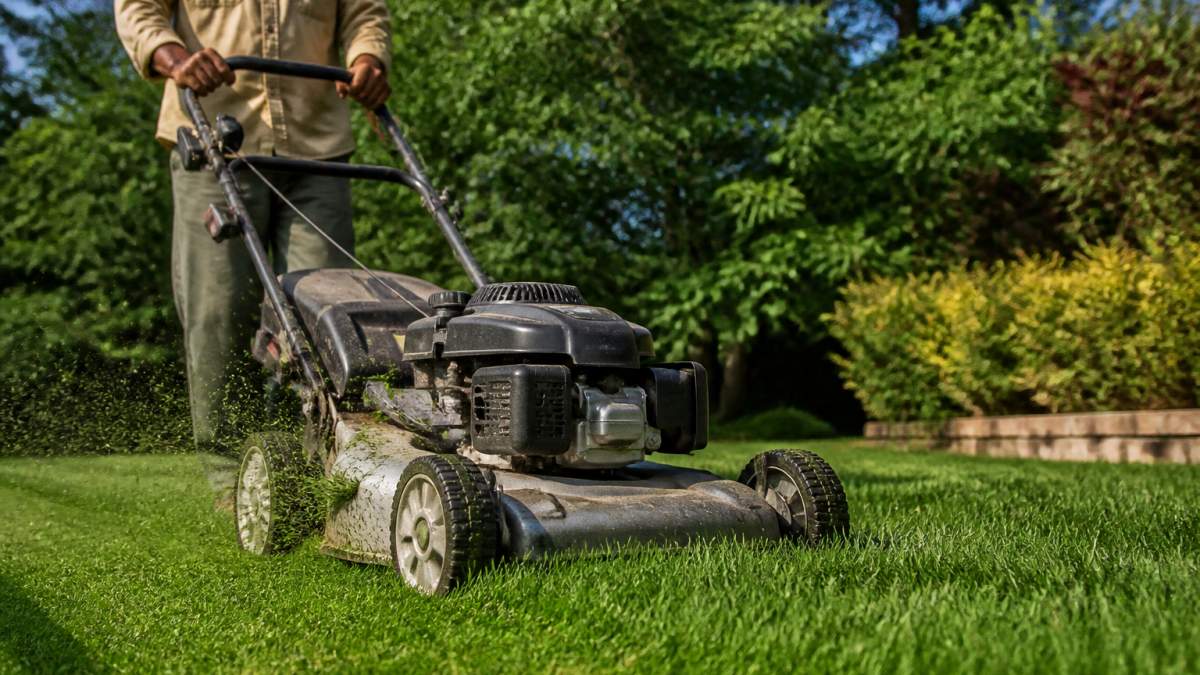
Set your mower one notch higher in summer. Taller grass shades the soil and slows water loss. In spring and fall, you can cut slightly lower to encourage new growth.
Sharp mower blades matter more than people think. A dull blade tears grass instead of slicing it. Torn tips brown off and invite disease.
The One-Third Rule and What It Means in Practice
The one-third rule means you never remove more than one-third of the blade height in a single cut. (What’s the One-Third Rule of Mowing) If your grass is three inches tall, take off no more than one inch. If it's grown to four inches, cut to about 2.7 inches, not down to one.
Here's how to apply it:
- Measure your grass before mowing, not after.
- If it's overgrown, mow in two passes a few days apart.
- Adjust mowing frequency to growth, not to a fixed weekly habit.
How Often to Water Lawn: Deep Soaks Beat Daily Sprinkles
Most lawns need about one to one and a half inches of water per week, delivered in deep soaks rather than daily sprinkles, based on guidance from Weed Man's 2026 lawn care plan. Deep watering pushes roots down. Shallow daily watering keeps roots near the surface, where heat dries them out fast.
Water early in the morning. Evening watering leaves blades wet overnight and invites fungus. Split the weekly amount into two or three sessions, and skip a session after real rain.
Watering Around Drought Restrictions
Drought rules change how you water, not whether you can. Check your local water authority's current schedule before you set a controller. Then:
- Water on your allowed days only.
- Prioritize the most visible turf and let the rest go dormant.
- Fix leaks and misaimed heads before adding minutes.
- Add mulch around beds to hold moisture.
How to Fix a Dry Lawn Without Wasting Water
To fix a dry lawn, water deeply, check your irrigation coverage, and reduce stress instead of flooding the turf. Most dry patches come from poor coverage, not from too little water overall.
Run a simple test. Place small cans across the lawn, run the sprinklers, and measure how much each can catches. Uneven results mean uneven watering.
Then take these steps:
- Fix or replace clogged and misaimed sprinkler heads.
- Aerate compacted soil so water soaks in instead of running off.
- Raise mowing height to shade the soil.
- Water in the early morning and skip windy days.
- Give damaged spots time before reseeding.
Watch out: flooding a dry lawn causes runoff and wasted water. Fix coverage first, then water.
Soil, Aeration, and Feeding: The Work Under the Turf
Soil health decides how well everything above it performs. Compacted soil blocks roots, water, and air. A simple screwdriver test tells you a lot: if it won't push into the soil, you likely need aeration. But soil work is where most homeowners guess, so here is how to remove the guesswork.
Soil Testing: Read the Results, Not Just the Report
A basic soil test shows pH, phosphorus, potassium, and organic matter, and many labs add micronutrients and a lime or sulfur recommendation. The numbers matter less than the interpretation:
- pH below 6.0 locks up phosphorus and slows cool-season grasses; pH above 7.5 reduces iron and manganese availability and can yellow turf.
- High phosphorus with low potassium usually means the lawn needs potassium, not more starter fertilizer.
- Low organic matter (under about 2%) means the soil holds little water and nutrients, compost topdressing helps more than extra fertilizer.
Test every two to three years, or whenever you change fertilizer programs or notice persistent problems. Fall is the best time to test because lime and sulfur need months to shift pH.
Aeration: Timing, Mechanics, and Trade-offs
Aeration pulls cores from the turf and relieves soil compaction. Do it when grass is actively growing so it can recover: cool-season grasses in early fall or early spring, warm-season grasses in late spring or early summer. Avoid aerating dormant or heat-stressed turf.
- Core aeration removes plugs and is the most effective method for relieving compaction.
- Spike aeration punches holes without removing soil and does less for compaction but is less disruptive.
- Aerate when soil is moist but not saturated, cores should pull out cleanly.
- Leave the cores to break down; they return organic matter to the surface.
After aerating, overseed and feed so seed and nutrients reach the root zone instead of sitting on top.
Feeding: Match the Fertilizer to the Grass and the Season
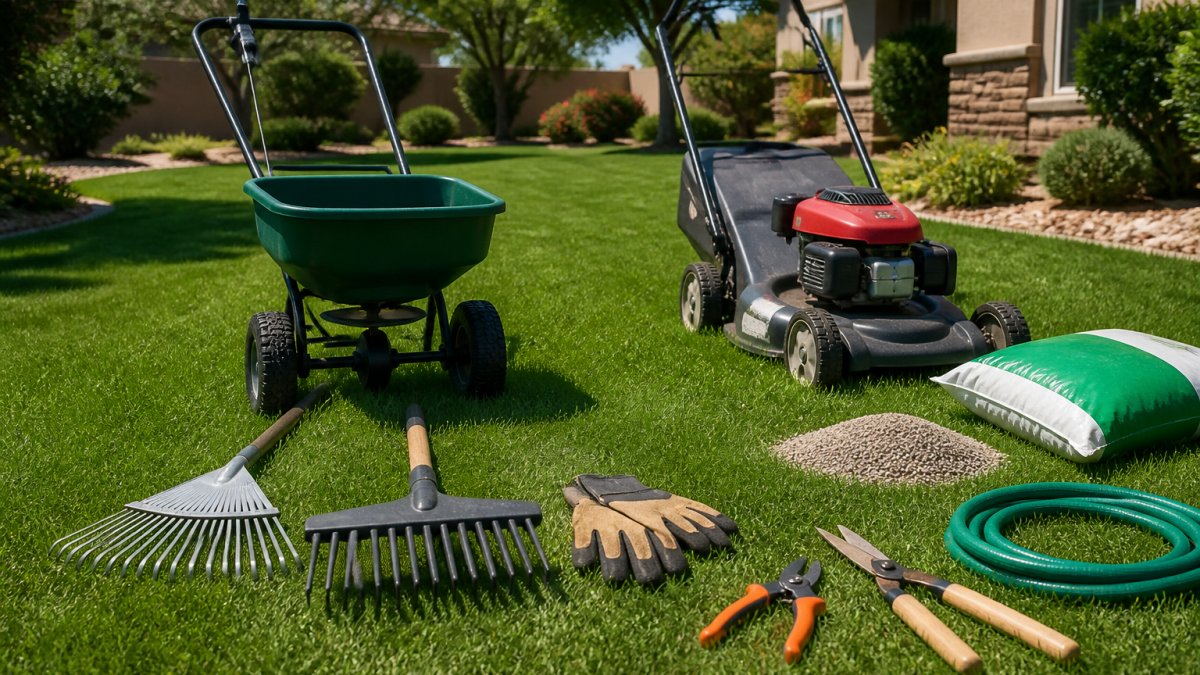
For feeding, use a broadcast spreader for even coverage and follow the label rate. Overfeeding pushes fast top growth at the cost of root development and increases runoff risk.
- Cool-season grasses (fescue, bluegrass): feed in early fall and again in late spring; skip peak summer heat.
- Warm-season grasses (Bermuda, buffalo): feed in late spring and summer when growth is strongest; avoid feeding into dormancy.
- Slow-release nitrogen feeds steadily and reduces burn risk; quick-release greens up fast but needs careful watering.
- Grasscycling, leaving clippings on the lawn, returns nitrogen and reduces fertilizer needs.
Weed Prevention, Pest Control, and Pet-Safe Products
Weed prevention beats weed pulling every time. Apply pre-emergent weed control before seeds sprout, and keep turf dense so weeds have no room. A thick, healthy lawn is the best weed prevention there is.
For pest control, identify the problem before you spray. Grubs, chinch bugs, and surface pests need different products and timing.
Pet-safe and pollinator-safe products deserve real attention:
- Read labels for re-entry times before letting pets or kids back on the lawn.
- Spot-treat instead of broadcasting where you can.
- Apply in the evening when pollinators are less active.
- Keep children and pets off treated areas until the label says it's safe.
For more on weed, pest, and pet-safe care, see Beyond the ordinary.
Book a Seasonal Lawn Assessment
You can explore your yard, reimagined to see the services we offer. Ready to schedule? Contact our team.
Frequently Asked Questions
What lawn care should I do each month?
Follow a lawn care schedule by month rather than reacting to problems. In late winter, rake winter debris and sharpen mower blades. Spring covers soil testing, pre-emergent weed control, and the first feeding. Summer focuses on deep watering, mowing at the right height, and watching for dry patches. Fall is for aeration, overseeding, and a final fertilizer pass. Winter means cleanup and equipment maintenance. Write the tasks on a calendar so nothing slips.
How often should I water my lawn?
Most lawns need about 1 to 1.5 inches of water per week, delivered in two or three deep soakings rather than daily sprinkles. Water early in the morning so less evaporates. In hot, dry weather, check soil 4 to 6 inches down before adding more; if it is still moist, wait. Deep watering pushes roots downward, which makes the turf more tolerant of dry spells and reduces how often you need to run the irrigation schedule.
How can I fix a dry lawn?
Test the soil first by pushing a screwdriver into it. If it resists, the ground is compacted and needs aeration before more water will help. Then water deeply, in cycles, so moisture reaches the root zone instead of running off. Raise the mowing height to shade the soil, and stop fertilizing until the grass recovers. Brown patches that stay flat after watering may be dead turf or disease, not drought, so check before reseeding.
What lawn care tasks should I avoid doing too early?
Do not fertilize or apply pre-emergent weed control before the grass is actively growing, and do not mow a wet lawn or cut more than one-third of the blade at once. Raking too aggressively in early spring pulls up crowns that are still dormant. Aerating when the soil is soggy creates clumps instead of holes. Waiting for the right soil temperature and dry conditions saves you from undoing weeks of work.
Your lawn doesn't need more products. It needs the right timing, the right height, and water that reaches the roots. Roadrunner Yard Maintenance handles mowing, seasonal cleanups, irrigation checks, and custom garden design so your turf stays healthy through every season. Get started with Roadrunner Yard Maintenance and build a lawn care plan that fits your grass and your climate.