 blog
Commercial Landscaping vs Xeriscaping for Offices: Costs
Last Updated: November 19, 2026
Quick Summary
Conventional commercial landscaping relies on lawns, ornamental beds and regular irrigation, while xeriscaping for offices uses low-water and native plants that reduce or eliminate heavy irrigation. Xeriscaping lowers water use and mowing but still needs establishment watering, plant matching, and periodic weed and mulch care.
- Prestonwood Landscape claims xeriscaping cuts commercial water use by 50% to 70%, though its methodology is unpublished.
- Plain City Code requires xeriscape methods on newly built and reconstructed commercial sites in that jurisdiction.
- Xeriscaping is low-maintenance but not no-maintenance, still requiring care after installation.
- Establishment watering in the first one to two years can temporarily raise water use above mature xeriscape levels.
- Use the same line items for both quotes, including irrigation, mowing, plant replacement and hardscape.
Table of Contents
- How Conventional Commercial Landscaping and Xeriscaping Differ
- Water Use and Irrigation Demand for Office Properties
- Commercial Xeriscaping Maintenance Costs Compared
- Benefits of Xeriscaping for Business Properties
- Calculating Commercial Landscaping ROI for Your Office
- Trade-Offs, Regional Suitability, and Common Misconceptions
- Deciding Which Approach Fits Your Office Grounds
- Frequently Asked Questions
How Conventional Commercial Landscaping and Xeriscaping Differ
Commercial landscaping and xeriscaping for offices sit at opposite ends of how an office property gets dressed. Conventional commercial landscaping typically relies on lawns, ornamental beds and regular irrigation to keep them green. Xeriscaping uses low-water and native plants, and it reduces or eliminates the need for heavy irrigation. The industry itself is large: the IBISWorld 2026 landscaping services industry analysis puts U.S. landscaping services at $176.7 billion with 556,000 businesses, though that figure does not separate office work from xeriscaping.
Many office properties inherit whatever landscape was installed when the building went up, which often means turf, shrubs and an irrigation system. Converting to a xeriscape is a deliberate choice, and it changes what gets planted, how the ground is prepared and how the site is watered.
Water Use and Irrigation Demand for Office Properties
Water is where the two approaches diverge most. A commercial-landscape provider, Prestonwood Landscape, claims xeriscaping can cut water use by 50% to 70% for commercial properties, but the source does not publish its methodology or baseline, so treat that figure as a provider claim rather than a measured result. Another commercial source, Landscape Management Company on xeriscaping, describes the approach as reducing the need for heavy irrigation through native, low-maintenance plants.
Some local rules make the choice for you. Plain City Code commercial landscape standards requires xeriscape methods on newly built and reconstructed commercial sites in that jurisdiction. Check the code that applies to your own property before assuming an approach is optional.
Commercial Xeriscaping Maintenance Costs Compared
Maintenance is where the comparison gets more nuanced, and where most generic xeriscaping articles stop short. Xeriscaping is often described as low-maintenance, but it is not no-maintenance. Xeriscaping reduces or eliminates irrigation needs, but it still requires care. The practical question for an office property is not whether xeriscaping is cheaper in the abstract, but which cost lines shrink, which grow, and which shift from seasonal labor to periodic capital.
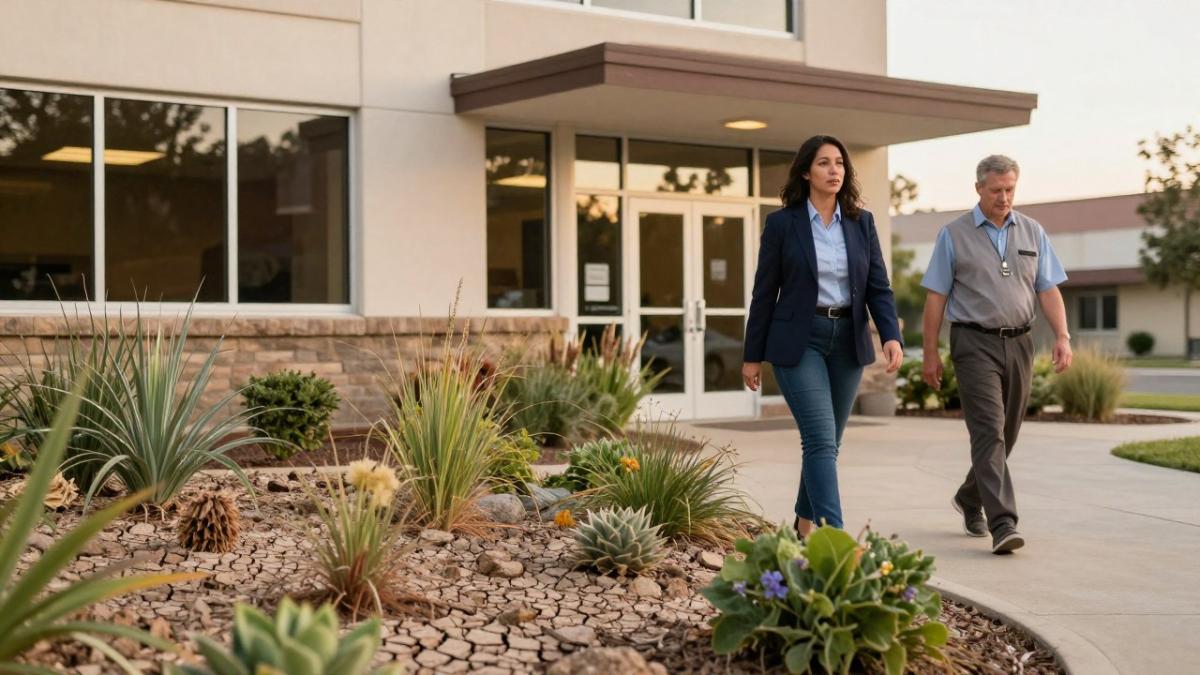
A useful way to compare the two approaches is to break maintenance into the same line items for both:
- Irrigation and water: Conventional turf typically runs a full sprinkler system with controller programming, seasonal adjustments, head repairs, valve work, and backflow testing. A xeriscape usually keeps drip or subsurface irrigation for establishment and occasional deep watering, which reduces runtime, water charges, and the frequency of head and valve repairs. The water line is the single biggest variable and the one most sensitive to local rates.
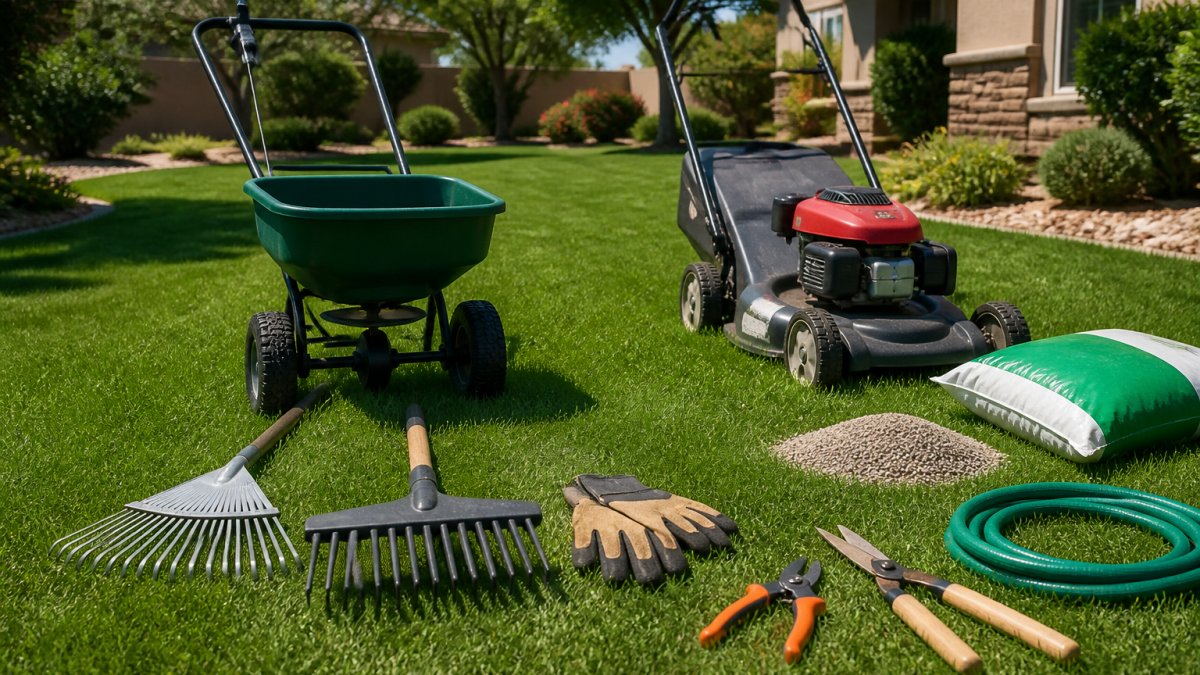
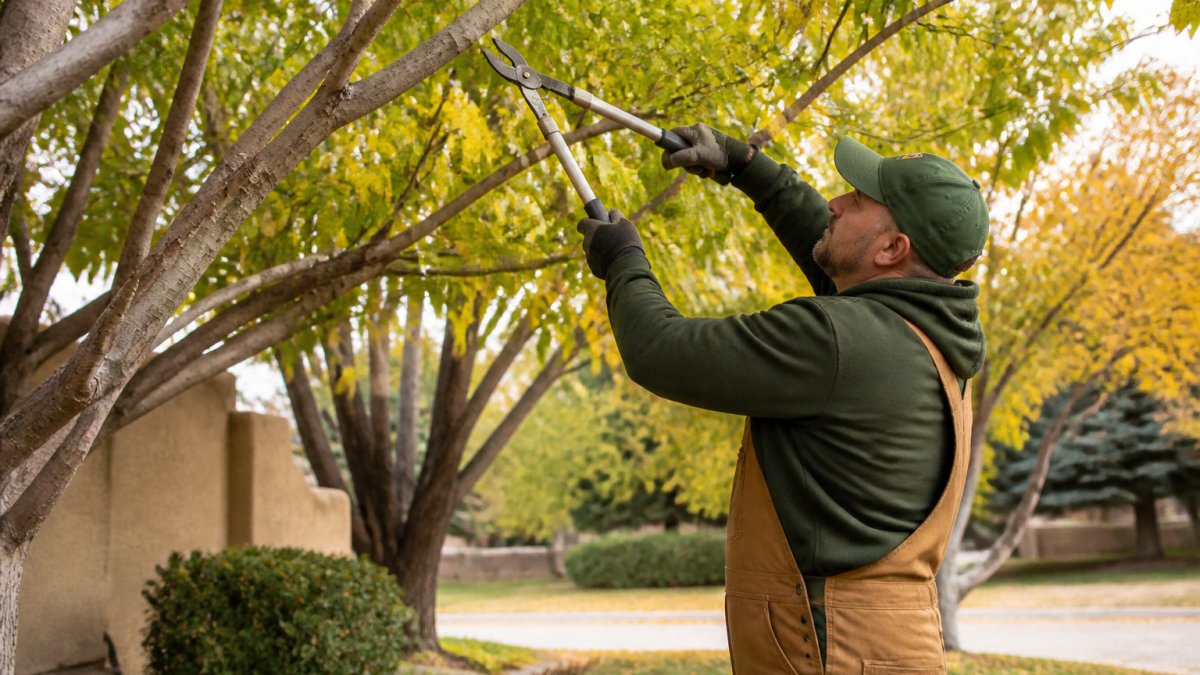
- Mowing, edging, and turf care: Conventional lawns carry recurring mowing, edging, fertilization, aeration, and overseeding. A xeriscape removes most of that, replacing it with seasonal pruning, weed management, and occasional mulch refresh.
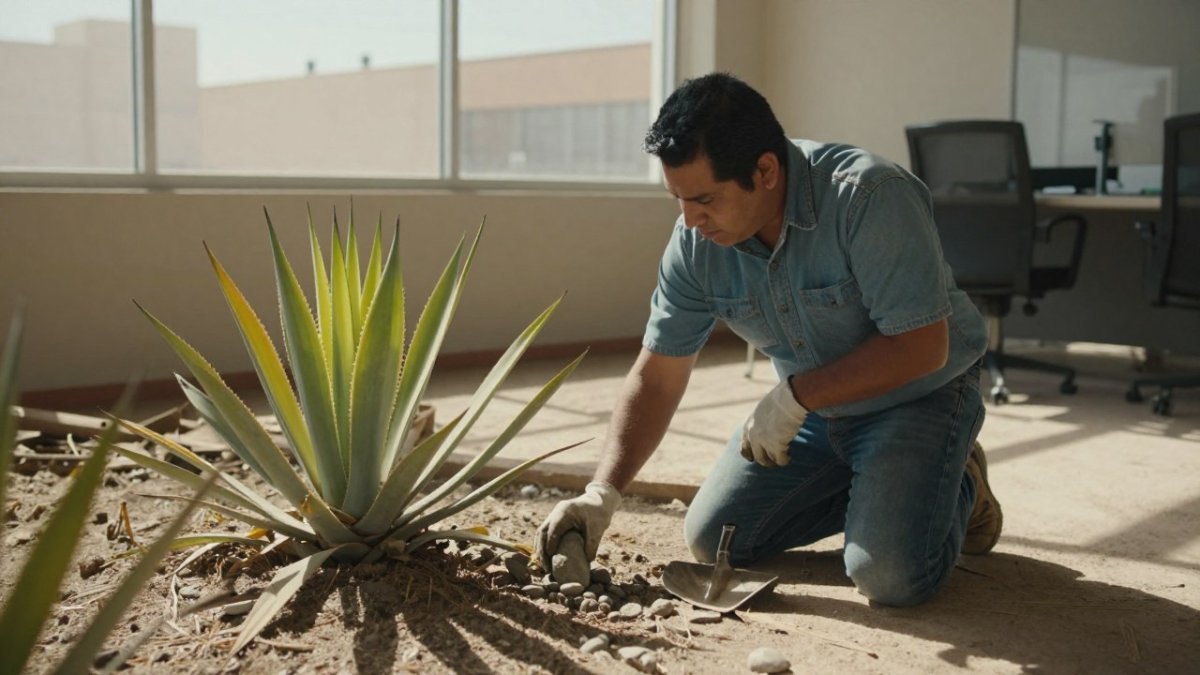
- Plant replacement: Turf in a dry climate often needs periodic patching or full replacement after heat or water restrictions. Xeriscape plantings, once established, generally need less replacement, but establishment losses are real, and a poorly matched plant palette can erase the savings.
- Hardscape and groundcover: Gravel, mulch, and permeable hardscape need occasional raking, topping up, and weed control. These are lower-frequency tasks than mowing but not zero.
- Seasonal labor profile: Conventional landscaping concentrates labor in the growing season. Xeriscaping spreads lighter labor across the year, which can smooth staffing and reduce peak-season crew costs.
Watch out: the 'low-maintenance' label can hide a higher upfront plant and soil-prep cost, and a xeriscape that is installed without proper soil preparation or plant-to-site matching will need more replacement and weed control than a well-run lawn.
Pricing depends on property size, soil condition, plant selection, and how much hardscape is involved, so no single dollar figure applies across offices. The productive move is to request a site assessment and ask for line-item estimates for both a turf-maintenance program and a xeriscape conversion, using the same line items above so the two quotes are actually comparable. Get current figures from visit the Roadrunner Yard Maintenance service page to see the services involved.
The article breaks maintenance into the same line items for both approaches, so the two can be compared directly.
| Cost line | Conventional turf | Xeriscape |
|---|---|---|
| Irrigation and water | Full sprinkler system, seasonal adjustments, head and valve repairs | Drip or subsurface for establishment and occasional deep watering |
| Mowing and turf care | Recurring mowing, edging, fertilization, aeration, overseeding | Most removed; seasonal pruning, weed management, mulch refresh |
| Plant replacement | Periodic patching or full replacement after heat or restrictions | Generally less once established; establishment losses are real |
| Hardscape and groundcover | Not applicable | Occasional raking, topping up, weed control |
| Seasonal labor profile | Labor concentrated in growing season | Lighter labor spread across the year |
Benefits of Xeriscaping for Business Properties
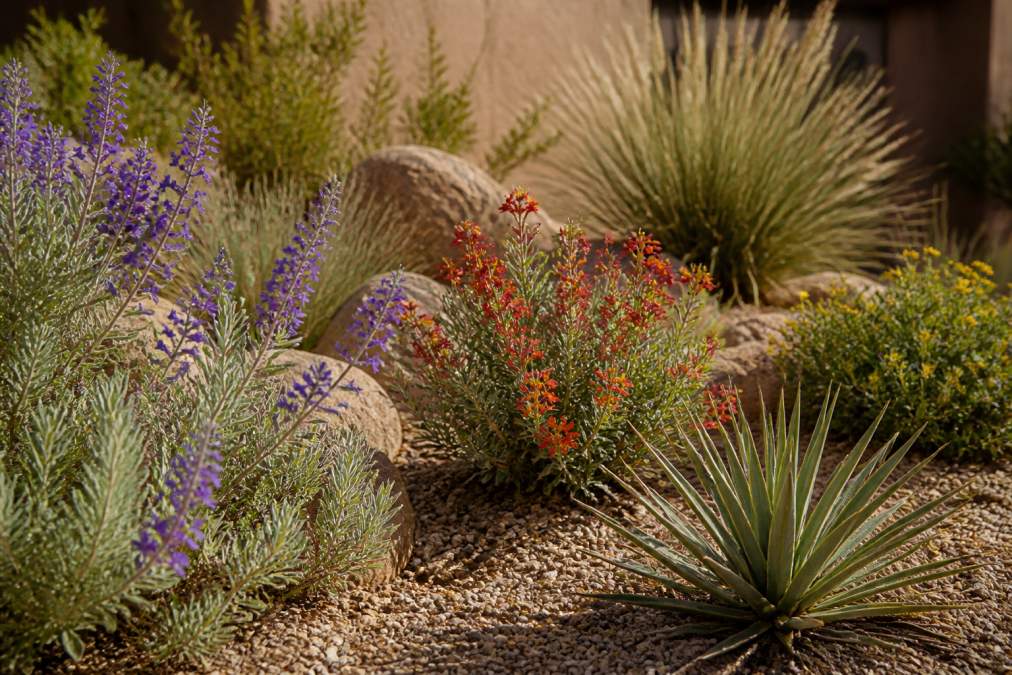
The main business benefits are lower irrigation demand, a landscape that holds up better through dry periods, and fewer seasonal replacements of struggling turf. For an office, that can mean less time spent on sprinkler repairs and a grounds plan that looks deliberate year-round. Curb appeal matters here too: a well-designed native planting presents a managed, intentional frontage to clients and staff.
The trade-off is design effort. A xeriscape only performs if plants are matched to the site and soil is prepared properly before installation.
Calculating Commercial Landscaping ROI for Your Office
Most articles on this topic mention that xeriscaping saves money and then stop. A property manager needs a payback framework, not a slogan. The approach below is a total-cost-of-ownership model you can populate with your own bills and contractor quotes; it is deliberately built around office-specific drivers rather than generic percentages.
Step 1, Establish the baseline. Pull twelve months of water bills, irrigation repair invoices, mowing and turf-care contracts, and any turf replacement costs. Divide by the irrigated square footage to get a cost per square foot for the current conventional landscape. This baseline is what any conversion has to beat.
Step 2, Estimate conversion cost. A xeriscape conversion typically includes turf removal and disposal, soil amendment, plant material, mulch or gravel, drip irrigation retrofit or conversion, and design. Get these as separate line items so you can see which costs are one-time and which recur.
Step 3, Estimate the new operating cost. Rebuild the same line items from Step 1 for the xeriscaped site: reduced water charges, lower irrigation repair frequency, lighter mowing, and new lines for seasonal pruning, weed management, and mulch refresh.
Step 4, Calculate annual savings and payback. Subtract the new operating cost from the baseline to get annual savings, then divide the one-time conversion cost by annual savings. That quotient is your simple payback period in years. If savings are small relative to conversion cost, the payback stretches out and the case weakens.
Step 5, Add the office-specific factors. Payback math misses things that matter to an office: tenant satisfaction, appearance of the entrance and outdoor break areas, shade and glare on walkways, and how the landscape reads to clients and visitors. These are harder to quantify but belong in the decision, and they can justify a conversion that is close to break-even on pure cash terms.
Step 6, Plan the transition. A phased conversion, for example, converting the perimeter first while keeping a smaller managed turf area near the building, spreads capital cost across budget cycles and limits disruption to office operations. It also lets you test plant performance before committing the whole site.
Watch out: establishment watering in the first one to two years can temporarily raise water use above the mature xeriscape level, so a payback model that assumes immediate savings will overstate the return.
Commercial landscaping ROI also depends on local water rates and any restrictions that limit irrigation, so confirm current rates and rules before finalizing the model. To talk through your options, contact Roadrunner Yard Maintenance for a site assessment and a clear quote.
Trade-Offs, Regional Suitability, and Common Misconceptions
The most common misconception is that xeriscaping means no irrigation at all. Most installations still need some water during establishment and in extended dry spells. A second misconception is that native plants are always cheaper; plant material and site preparation can be a significant upfront cost. Regional suitability depends on local water restrictions, soil and climate, so confirm the rules that apply to your property. Roadrunner Yard Maintenance can help you judge which plants and watering plan fit your site.
Deciding Which Approach Fits Your Office Grounds
Choose conventional commercial landscaping if your grounds are heavily used and turf is a functional part of the space. Choose xeriscaping for offices if you want lower water demand, less irrigation upkeep and a design that suits the dry climate. Many properties end up with a hybrid: a xeriscaped perimeter with a smaller, managed turf area near the building. To talk through your options, contact Roadrunner Yard Maintenance for a site assessment and a clear quote.
Frequently Asked Questions
Does xeriscaping lower property value for commercial buildings?
The supplied research does not include data showing how xeriscaping affects commercial property value, so no specific effect can be stated. Curb appeal, plant health, and how well the design is maintained tend to matter most to tenants and buyers. A well-designed xeriscape with healthy native plants can look intentional and polished, while a neglected one can look worse than a maintained lawn. For a valuation question, a local commercial appraiser or broker is the right source. Roadrunner Yard Maintenance can share current service details and a site-specific quote on request.
Is xeriscaping suitable for all office park environments?
Not every site is a good fit. Xeriscaping depends on site conditions such as soil, drainage, sun exposure, and the plants chosen for the location. Some local rules may require particular landscape methods, so check local code before planning a project. Offices with heavy foot traffic or areas that need lawn for recreation may need a mixed approach. A site assessment helps determine which zones suit native and drought-tolerant plantings and which need a different treatment.
What is the difference between traditional commercial landscaping and xeriscaping?
Traditional commercial landscaping often relies on turf grass and regular irrigation to keep plantings green. Xeriscaping uses low-water and native or drought-tolerant plants, mulch, and reduced irrigation to lower water demand. Both can look professional when designed and maintained well. The main differences show up in water use, plant selection, and the maintenance tasks each approach requires. Pricing for either option depends on the size of the property, plant selection, and irrigation needs, so contact Roadrunner Yard Maintenance for a quote on your site.