 How-to
7 Steps to Custom Garden Design for Desert Yards
Last Updated: October 30, 2026
Quick Summary
Custom garden design for desert yards starts with mapping your site and setting a realistic water budget before choosing any plants. Amend the soil, group native and desert-adapted plants by water need, and build irrigation zones around those needs rather than sprinkler placement. Hardscape, layered xeriscape planting, and seasonal maintenance complete the plan.
- Sketch your lot and mark sun, shade, reflected heat, and drainage before buying plants.
- Break up hardpan in the top 15 to 20 centimeters of each bed and mix in compost.
- Build plant palettes in layers: structural plants, mid-layer shrubs, color and bloom, groundcover.
- Loop tree drip rings 12 to 18 inches from the trunk and expand them as the canopy grows.
- Repeat plant types in odd-numbered groups of three, five, or seven for intentional-looking beds.
Table of Contents
- Step 1: Map Your Site and Set a Realistic Water Budget
- Step 2: Fix the Soil Before You Plant Anything
- Step 3: Choose the Best Native Plants Albuquerque 2026 Yards Rely On
- Step 4: Plan Desert Garden Irrigation Around Zones, Not Sprinklers
- Step 5: Build Hardscape and Gravel Paths That Hold the Design Together
- Step 6: Apply Albuquerque Xeriscape Design Rules Without Making It Look Bare
- Step 7: Set a Seasonal Maintenance and Lighting Plan
- Common Mistakes That Kill Desert Gardens in the First Year
- Frequently Asked Questions
Step 1: Map Your Site and Set a Realistic Water Budget
Custom garden design for desert yards starts with a hard truth: water is the budget, not the afterthought. Before you pick a single plant, measure every planting bed, slope, and sun-baked corner of your lot. Then decide how much water you're willing to commit each month.
Most failed desert gardens skip this step. They buy plants first, then guess at irrigation. The result is a yard that looks fine in spring and dies by July.
Here's how to map it properly:
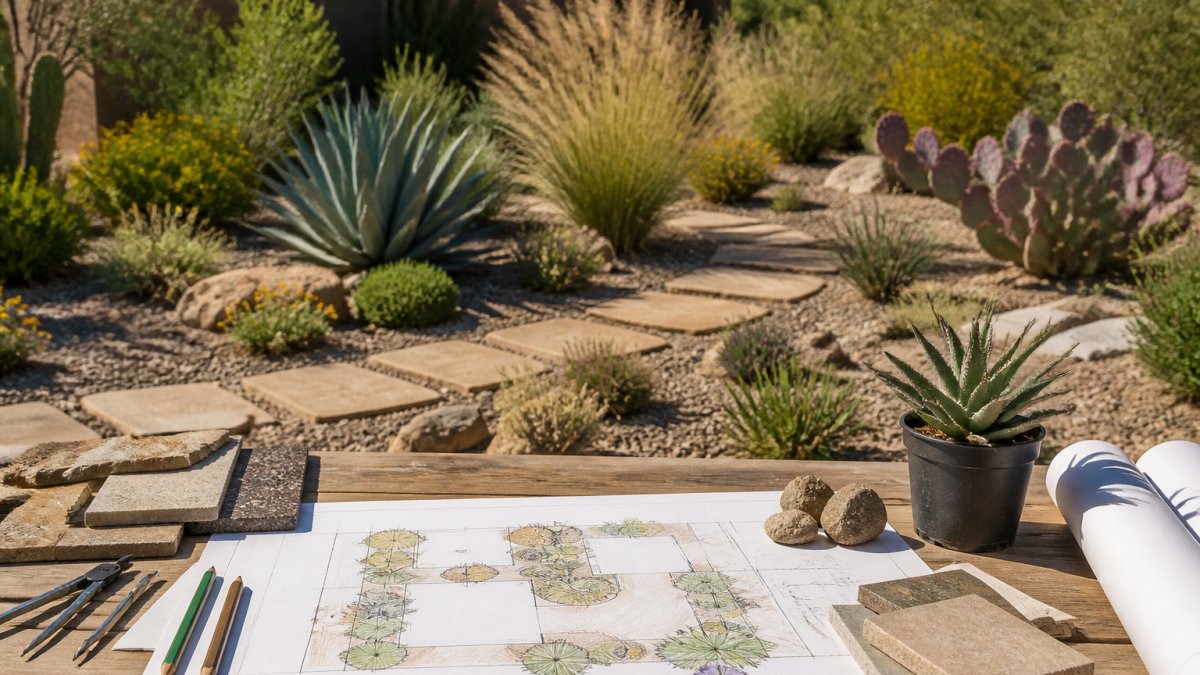
- Sketch your lot and mark full sun, part shade, and reflected heat from walls or pavement
- Note where water pools after rain and where it runs off
- Mark existing trees, utility lines, and drainage swales
- Assign each zone a water priority: high, medium, or low
If you want help translating that map into a full planting and installation plan, you can explore
Step 2: Fix the Soil Before You Plant Anything
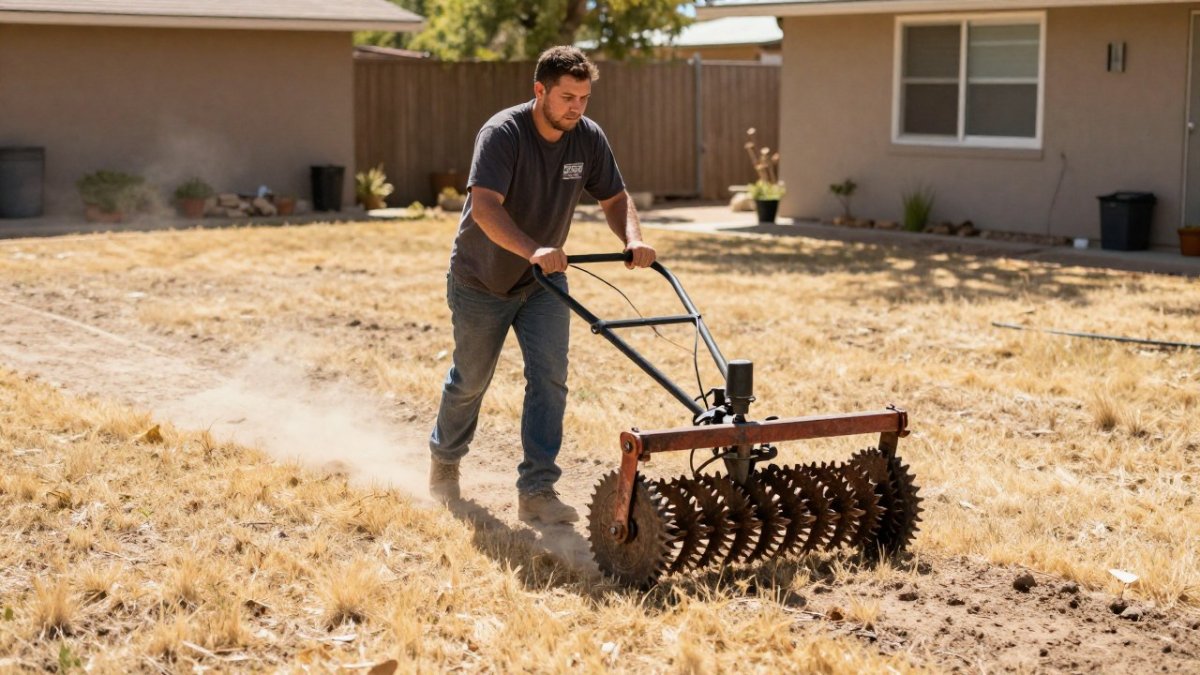
Our desert soil is alkaline, rocky, and low in organic matter. Plants that thrive in nursery pots often stall in it. Amend before you plant, not after.
A common mistake is digging a small hole and dropping in a plant with no soil prep. Roots hit caliche and stop growing. The plant survives a season, then fades.
What works:
- Break up hardpan in the top 15 to 20 centimeters of each bed
- Mix in compost to improve drainage and water holding
- Add a thin gravel or pebble mulch layer on top to cut evaporation
- Test drainage by filling a hole with water and timing how fast it drains
Good soil prep is the least glamorous part of custom garden design for desert conditions. It's also the difference between a garden that lasts and one you replant every year.
Step 3: Choose the Best Native Plants Albuquerque 2026 Yards Rely On
Native and desert-adapted plants do the heavy lifting in any low-water landscape. They evolved here. They handle heat, wind, and lean soil without constant fuss.
The best native plants Albuquerque 2026 gardeners reach for again and again include agave, brittlebush, desert marigold, penstemon, and native grasses. Add sculptural cacti and succulents for structure, plus flowering shrubs for seasonal color and desert bloom.
For deeper plant lists and design ideas, browse beyond the ordinary.
Build your palette in layers:
- Structural plants: agave, yucca, cacti
- Mid-layer shrubs: sage, brittlebush, Apache plume
- Color and bloom: penstemon, desert marigold, globe mallow
- Groundcover: native grasses and low spreaders
Group plants by water need. Mixing thirsty plants with dry ones forces you to overwater the whole bed.
USDA PLANTS Database native plant profiles
Step 4: Plan Desert Garden Irrigation Around Zones, Not Sprinklers
Desert garden irrigation works best when you design zones around plant water needs, not around where sprinkler heads happen to land. Three zones cover most yards: high, medium, and low water. The difference between a garden that thrives and one that limps is usually in the details of how those zones are built and scheduled.
Start by translating your site map into a zone plan. Keeping each zone to a manageable planted area helps pressure stay even, so one failed emitter doesn't take out a whole bed. Group plants by water need first, then by sun exposure, then by soil type.
Drip lines suit trees, shrubs, and beds. They deliver water slowly to the root zone and waste less to wind and evaporation. Specify pressure-compensating emitters so the first and last plant on a line get the same flow, and Run separate valves for each zone so you can water deeply and less often. For trees, loop a ring of drip 12 to 18 inches from the trunk and expand it as the canopy grows; emitters pressed against the trunk invite rot.
Watch out: running one schedule for the whole yard starves your low-water plants and drowns the rest. Set timers by zone, and adjust them seasonally. Watering frequency should be set by zone and adjusted seasonally to match each zone's water needs.
A few rules that save plants:
- Water deeply and infrequently to push roots down
- Check emitters and lines monthly for clogs and leaks, and flush lines at the start of each season
- Add a rain shutoff and a soil moisture sensor so storms don't double up your watering
- Install a filter and pressure regulator at the valve; desert water is often hard and gritty, and unfiltered drip clogs fast
- Slope drip lines to drain and blow them out before the first freeze if you live where hard freezes occur
If you want the zone plan and emitter layout drawn for your specific lot, your yard, reimagined shows how a custom design translates into an install-ready irrigation plan.
EPA WaterSense irrigation guidance
Step 5: Build Hardscape and Gravel Paths That Hold the Design Together
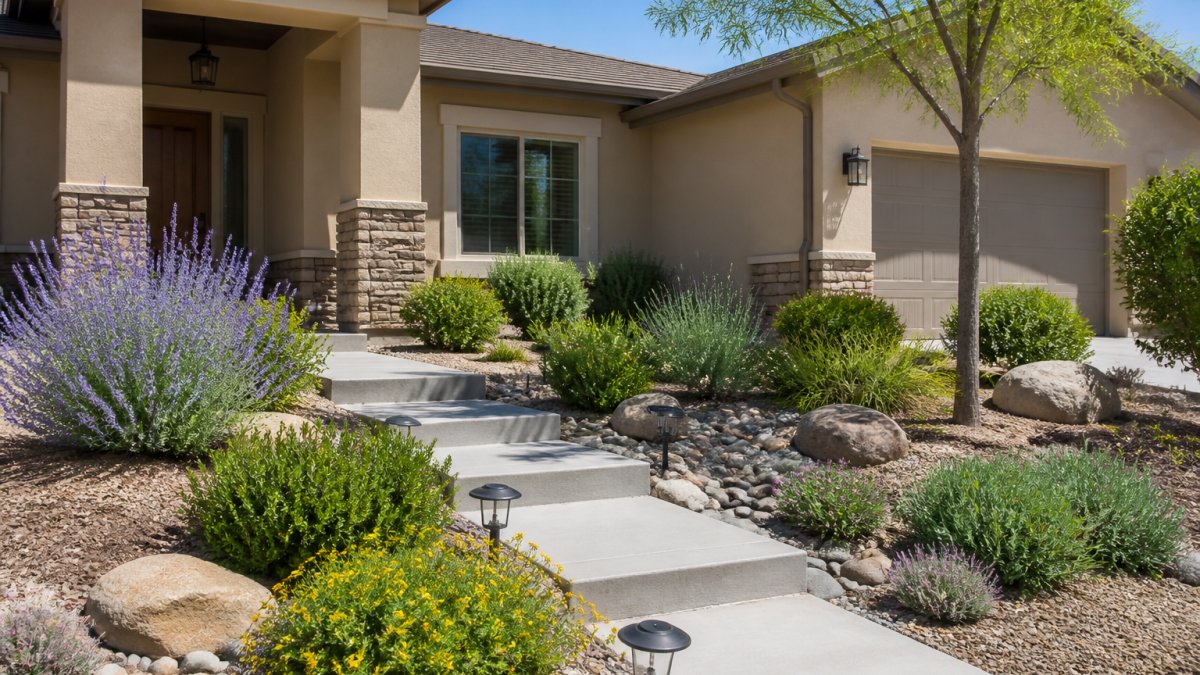
Hardscape gives a desert garden its bones. Gravel paths, boulders, retaining walls, and shade structures define the outdoor living space and cut maintenance at the same time.
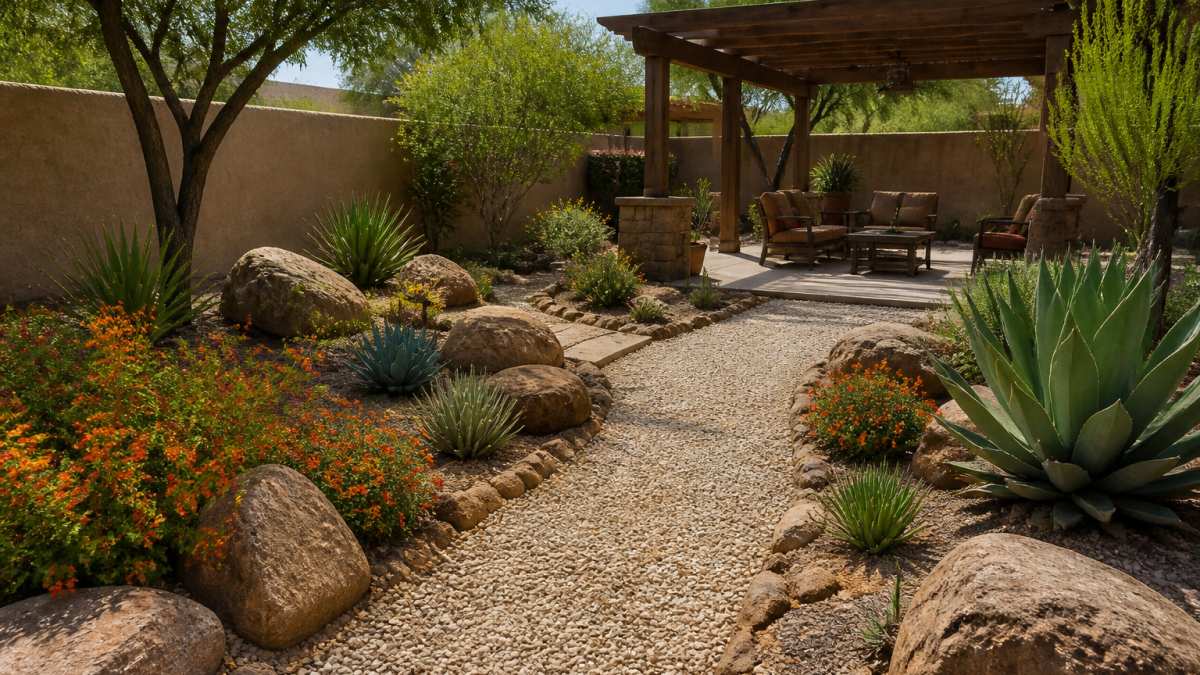
Lay gravel paths along natural walking lines. Use boulders as focal points and to hold soil on slopes.
To picture what finished hardscape and paths look like, see our work.
- Use compacted base under gravel so paths stay put
- Edge beds to keep gravel out of soil
- Slope hardscape away from the house for drainage
- Choose heat-resistant materials that won't scorch feet or fade
Step 6: Apply Albuquerque Xeriscape Design Rules Without Making It Look Bare
Albuquerque xeriscape design is not a yard full of gravel and one lonely cactus. Done well, it's layered, textured, and full of life. The technical distinction matters: xeriscaping is a water-conservation methodology that plans every plant, soil amendment, and irrigation line around low water use from day one. Traditional desert design often starts with a look and adds water-hungry plants first, then fixes problems later. If your goal is a specific water savings target, xeriscaping is the framework; desert design is the aesthetic.
The trick is repetition and contrast. Repeat a few plant types in groups of three, five, or seven rather than dotting one of everything across the bed. Odd-numbered clusters read as intentional; even numbers and singletons read as accidental. Contrast spiky agave against soft grasses, fine-textured brittlebush against broad yucca leaves, and dark green against silver and blue-grey foliage. Use terracotta pots and sculptural plants to add height and interest, and let boulders repeat through the design so the eye has something to follow.
A balanced low-water bed combines evergreen structure with seasonal color and accent plants, so the garden doesn't look bare in winter when the bloom is gone. Groundcover should cover bare soil over time so the bed looks finished.
Balance the design with:
- A clear focal point in each view, usually a sculptural plant or boulder, not a lawn ornament
- Varying heights from groundcover to small trees, with at least three distinct layers
- Seasonal color from desert bloom staggered across spring, summer, and fall so something is always flowering
- Open space that reads as intentional, not empty, using gravel, mulch, or groundcover to define it
- Negative space framed by plants rather than left as a void
Xeriscaping and traditional desert design differ mainly in water strategy, with xeriscaping planning plants, soil, and irrigation around low water use from the start. If you are working toward a water budget, ask your designer which hydrozone each plant belongs to before you approve the palette; that single question separates a xeriscape plan from a plant list.
To see how these ratios and layers come together on a real lot, browse beyond the ordinary.
Step 7: Set a Seasonal Maintenance and Lighting Plan
A desert garden still needs care. Plan maintenance by season so nothing gets away from you.
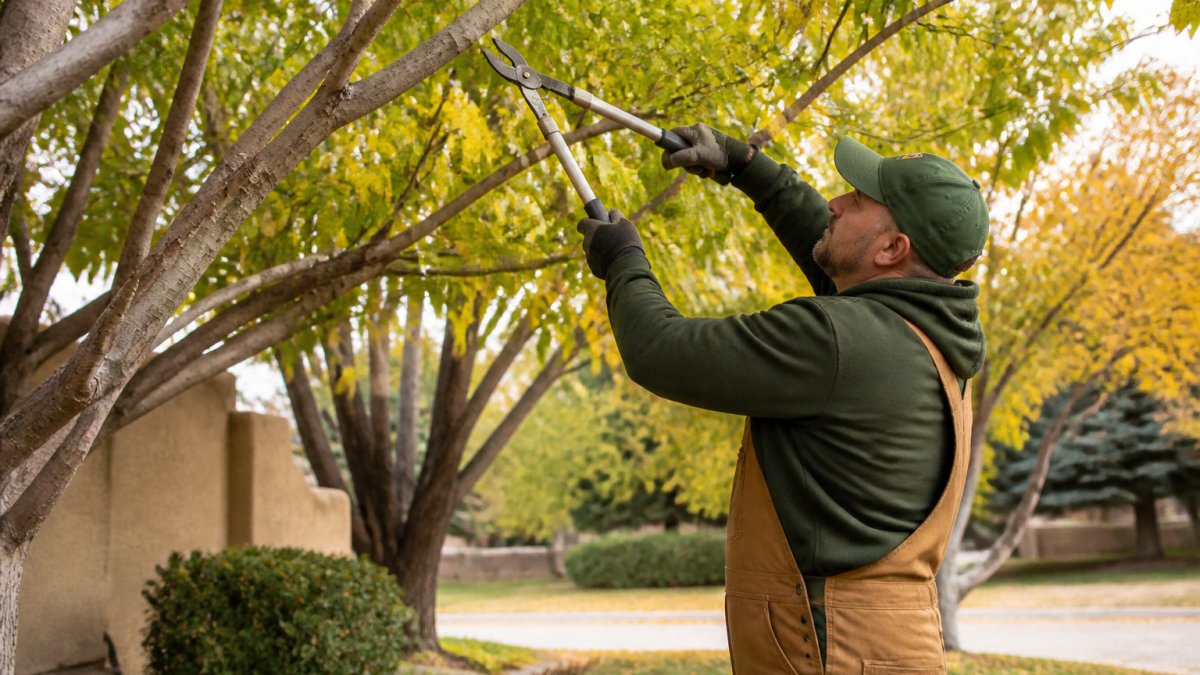
Spring means pruning, refreshing mulch, and checking irrigation. Summer calls for deep watering and heat checks. Fall is for planting and cleanup. Winter is for structural pruning and planning.
Lighting design matters in desert heat.
A simple seasonal checklist:
- Spring: prune, mulch, test emitters
- Summer: adjust watering, watch for heat stress
- Fall: plant, clean up, refresh gravel
- Winter: structural pruning, plan next year
American Society of Landscape Architects residential design trends
Plan care by season so nothing gets away from you.
| Season | What to do |
|---|---|
| Spring | Prune, mulch, test emitters |
| Summer | Adjust watering, watch for heat stress |
| Fall | Plant, clean up, refresh gravel |
| Winter | Structural pruning, plan next year |
Common Mistakes That Kill Desert Gardens in the First Year
The first year decides whether a garden survives. Most failures trace back to a handful of avoidable errors.
- Planting in unamended soil and hoping for the best
- Overwatering low-water plants out of habit
- Mixing water zones on one irrigation schedule
- Skipping mulch, then losing moisture to sun and wind
- Choosing plants for looks alone, without checking heat and water needs
- Ignoring drainage so water pools at roots
If you'd rather avoid the trial and error, contact us for a consultation and a plan built for your yard.
Frequently Asked Questions
How do you design a garden for a desert climate?
Start with the site, not the plants. Map sun exposure, slope, and drainage, then set a water budget before choosing anything. Amend the soil, group plants by water need into irrigation zones, and pick native and drought-tolerant species that already survive local heat. Add hardscape, gravel mulch, and shade structures to reduce evaporation. A workable desert garden design is built in that order, because plant choices made before soil and irrigation are settled usually fail in the first summer.
What plants work best in a desert garden?
Native and desert-adapted plants outperform anything else. Agave, cacti, succulents, and sculptural plants give structure, while desert flowering shrubs and small trees add color and shade. Native plants also support local pollinators and need less water once established. Group them by water need so irrigation zones match the planting. Avoid high-water turf in large areas and replace it with pebble mulch, gravel, or artificial turf only where you actually use the space.
How should you plan desert garden irrigation?
Divide the yard into hydrozones, grouping plants with similar water needs on separate valves. Drip lines on separate schedules beat one sprinkler timer running everything together. Check emitters each season for clogs and leaks. Run irrigation early in the morning so water soaks in rather than evaporating. Good desert garden irrigation saves water and keeps plants healthier than hand watering, which is inconsistent and usually too shallow.
How much does custom desert garden design cost?
Pricing depends on lot size, hardscape scope, irrigation work, and plant quantities, so most companies quote per project rather than publishing flat rates. Ask for a written scope that separates design, materials, labor, and irrigation so you can compare bids fairly. Request current pricing and a quote directly from the company you are considering, and confirm what maintenance is included after installation. A design that fits your water budget and soil will cost less to maintain over time.
A desert garden rewards planning over guesswork. At Roadrunner Yard Maintenance, we handle custom garden design, hardscaping, and irrigation installation for homes and commercial properties across Albuquerque. Our team builds sustainable landscapes tailored to the local climate, with proactive irrigation management and seasonal care so your outdoor space keeps thriving. Get started with Roadrunner Yard Maintenance and turn your yard into a lasting desert oasis.