 How-to
How to Aerate a Lawn in the High Desert
Last Updated: November 28, 2026
Quick Summary
To aerate lawn in the high desert, first check whether the soil is compacted, then time the job for when the grass is actively growing, and water lightly the day before. Core aeration with a rented machine usually suits dry, hard soil best.
- Clay-heavy or high-traffic lawns generally need aeration once a year.
- Cool-season grass is usually safer to aerate in fall, about four to six weeks before the first frost.
- Use a core aerator that pulls soil plugs; spike aerators can compact clay further.
- Aerate holes about 2 to 3 inches deep, spaced 3 to 4 inches apart, in crisscross passes.
- Water deeply right after aerating and keep the holes moist, checking soil 2 to 3 inches deep.
Table of Contents
- How to Aerate a Lawn in the High Desert
- Why High-Desert Soil Needs Aeration
- Best Time to Aerate Lawn in a Dry Climate
- Preparing Your Lawn and Watering Before Aeration
- Choosing Your Tool: Core Versus Spike Aeration
- How to Aerate Lawn by Hand
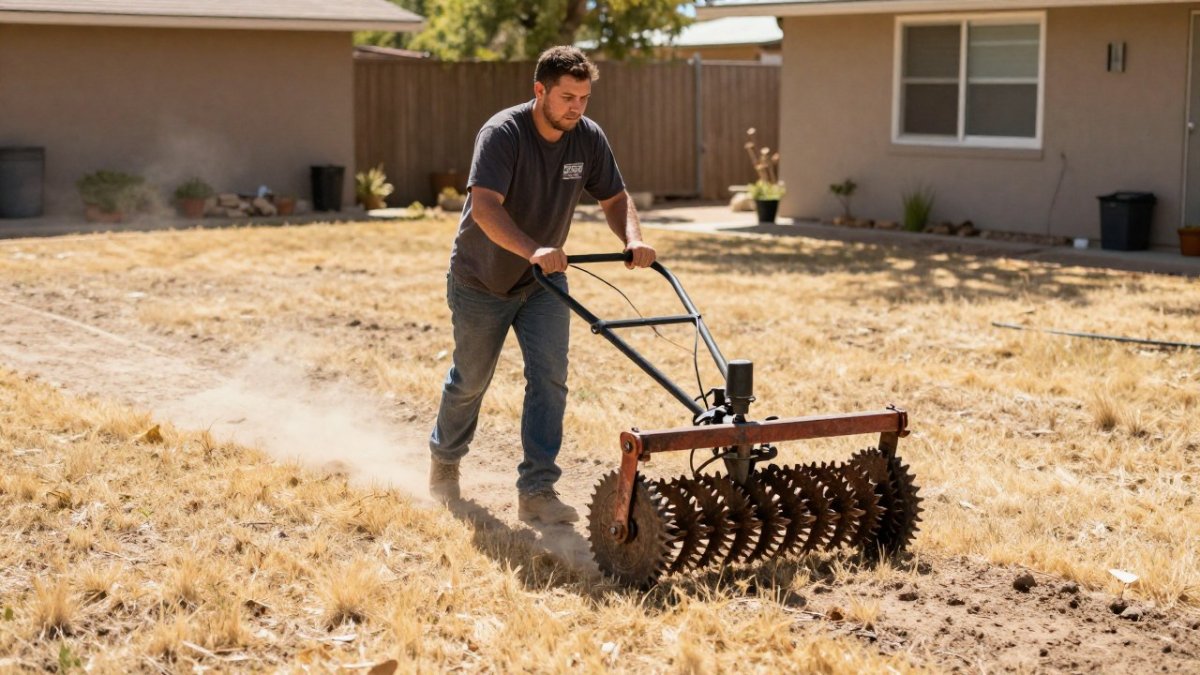
- How to Aerate Lawn with Machine
- What to Do After Lawn Aeration
- Frequently Asked Questions
How do you aerate a lawn in the high desert? Start by checking whether your soil is actually compacted, then time the job for when the grass is growing, and water the lawn lightly the day before. Core aeration with a rented machine is usually the best choice for dry, hard soil. The steps below cover the practices that suit the dry, high-elevation conditions most local lawns face.
Dry, compacted soil is the main reason lawns struggle here. Water runs off hard ground instead of soaking in, and roots stop getting the air and moisture they need. Aeration pulls small plugs of soil out of the lawn so water, air and fertilizer can reach the root zone. It is one of the few lawn jobs that fixes the problem underneath the grass.
How to Aerate a Lawn in the High Desert
Aerating a lawn in the high desert takes a bit more planning than in wetter areas. Soil is harder, water is limited and heat can dry out fresh holes quickly. The steps below walk through timing, preparation, tool choice, the hand and machine methods and aftercare.
Why High-Desert Soil Needs Aeration
High-desert soil is often hard, dry and packed down. Foot traffic, mowing and clay-heavy ground all press the particles together. When soil gets this dense, water sits on top instead of soaking in, and roots struggle to find air.
One guide recommends aerating heavy-clay or high-traffic lawns once a year, loam lawns with moderate use every two to three years, and sandy lawns with light use rarely (MyWild lawn aeration frequency guidance by soil type). Most Albuquerque yards with clay or packed soil fall into the once-a-year group.
Signs your lawn needs aeration include:
- Water pools or runs off instead of soaking in
- Soil feels hard when you push a screwdriver into it
- Grass thins out in high-traffic paths
- Thatch builds up over the roots
Best Time to Aerate Lawn in a Dry Climate
Timing matters more here than almost anywhere else. Aerate when the grass is actively growing so it can heal the holes quickly, and avoid the hottest weeks of summer and the cold of winter. In the high desert, the useful question is not just "spring or fall" but "which window at my elevation, for my grass type, between the last frost and the first heat spike."
Soil temperature is a useful guide. One source gives 50 to 65 degrees Fahrenheit as the soil range for cool-season grass recovery and 65 to 80 degrees for warm-season grass (Root Revive Direct guidance on grass recovery temperatures). Many local lawns are a mix, so check which grass you have before you choose a window.
Cool-season grass (fescue, bluegrass): Late spring or early fall. Fall is usually the safer bet in the high desert because the grass is recovering from summer stress and the soil is still warm from the season. Aim for a window roughly four to six weeks before the average first fall frost so new growth and any overseeded grass can establish before cold sets in.
Warm-season grass (Bermuda, buffalo grass): Late spring into early summer, once the grass is fully green and soil has warmed past about 65 degrees Fahrenheit. Aerating too early, while the grass is still coming out of dormancy, leaves open holes that heal slowly and invite weeds.
Elevation shifts the calendar. Lower valley elevations warm earlier and heat up harder, so spring windows open sooner and summer windows close faster. Higher elevations run cooler, with later last-frost dates and earlier first-frost dates, which compresses the safe fall window.
Avoid these windows:
- The hottest weeks of summer, when fresh holes dry out and grass is already stressed
- Drought, when the grass is not growing and cannot recover
- Dormancy, whether summer or winter
- Right before a forecast of hard frost or a heat wave
The Old Farmer's Almanac also warns against aerating during drought, extreme heat or dormancy. A fixed calendar date is less useful than watching the weather and the grass (The Old Farmer's Almanac on how to aerate your lawn).
Watch out: Aerating in the middle of a dry, windy hot spell can turn small holes into dried-out craters within a day, so check the seven-day forecast for moderate temperatures and no extreme wind before you rent the machine.
Preparing Your Lawn and Watering Before Aeration
Prep makes the job easier and the results better. Water the lawn lightly one to two days before you aerate. The soil should be moist enough that the tines slide in, but not soggy or muddy. Dry, rock-hard soil bounces the machine and pulls up less soil.
Mow the lawn a little shorter than usual so the aerator reaches the soil. Clear away toys, hoses and sprinkler heads. Mark any underground irrigation lines so you don't damage them.
Check your watering schedule too. Many Albuquerque homeowners follow local water restrictions, so plan to water within the rules. Adjust your irrigation timers before and after the job so the new holes stay moist without wasting water. Our guide to irrigation system maintenance tips can help you keep your system efficient in a dry climate.
Choosing Your Tool: Core Versus Spike Aeration
Core aeration is the better choice for most high-desert lawns. A core aerator removes small plugs of soil and leaves them on the surface. This opens the ground properly.
Spike aeration pushes solid tines into the soil. It can make the ground more compact, not less, especially in clay. The Old Farmer's Almanac notes that spike aerators can compact soil further, while core aerators remove soil plugs (The Old Farmer's Almanac comparison of core and spike aerators).
For hard, dry soil, you want a core aerator with hollow tines that pull real plugs. Shoes with spikes are not a substitute.
The two main aeration tools differ in how they treat the soil, which matters a lot in hard high-desert ground.
| Tool | Best for | Key difference |
|---|---|---|
| Core aerator | Hard, dry, clay soil | Removes soil plugs and opens the ground |
| Spike aerator | Lighter, looser soil | Pushes solid tines in and can compact soil further |
How to Aerate Lawn by Hand
Hand aeration works for small lawns, usually under a few hundred square feet. It takes longer and needs more effort, but it costs nothing beyond a tool.
- Water the lawn lightly the day before.
- Use a hand core aerator or a hollow-tine tool.
- Push the tool into the soil about 2 to 3 inches deep.
- Pull out the plug and leave it on the lawn.
- Space holes about 3 to 4 inches apart.
- Work in crisscross passes, north to south, then east to west.
- Break up the plugs with a rake when they dry.
Common mistake: Stepping on the holes or using a tool with solid spikes. Both undo the work.
How to Aerate Lawn with Machine
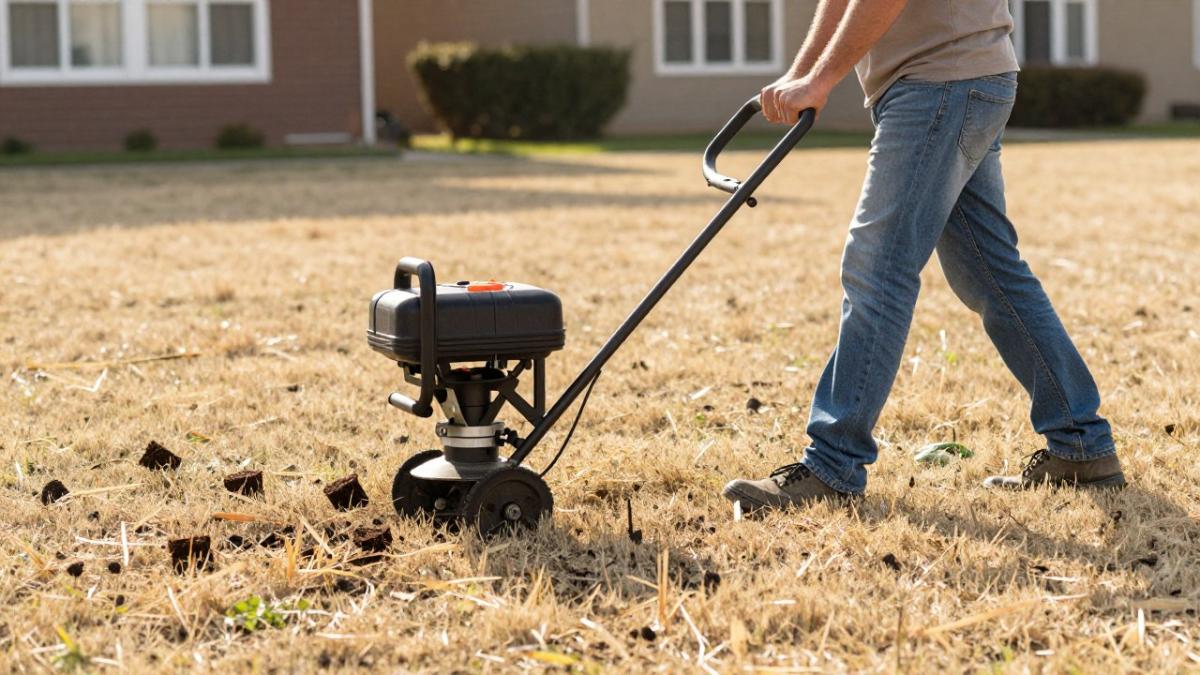
For many lawns, a rented gas-powered core aerator is an efficient option.
- Water the lawn lightly one to two days before the job.
- Mow short and clear the yard.
- Set the machine to a depth of 2 to 3 inches.
- Make one pass in one direction, then a second pass crossing it.
- Overlap passes slightly so you don't miss spots.
- Leave the plugs on the lawn to break down.
Watch out: Run the machine slowly on hard ground. Going too fast skips the holes and wears you out.
What to Do After Lawn Aeration
Aftercare decides whether the holes help or fade. In the high desert, heat, wind, and low humidity dry fresh holes fast, so the first week matters more than in cooler climates. The goal is to keep the root zone moist without wasting water or breaking local watering rules.
Day 0 (aeration day): Water deeply right after aerating so moisture reaches the root zone and the plugs begin to break down. Water in the morning if possible so the surface dries before evening and disease pressure stays low.
Days 1-3: Check soil moisture at 2 to 3 inches deep each morning. Water again when the top inch is dry, typically every one to two days in hot, windy weather and less often in cool weather. Light, frequent watering is better than one heavy soak during this window because the goal is to keep the holes and any seed moist, not to saturate the soil.
Days 4-14: Begin tapering to deeper, less frequent watering as the grass recovers and the plugs crumble. Break up remaining plugs with a rake once they are dry. If you overseeded, keep the surface consistently moist until germination, then shift to deeper watering to push roots down.
Overseeding: Overseed only when the timing fits your grass type, and do it right after aeration so seed falls into the holes and contacts soil. Use a seed blend matched to your grass and spread it at the label rate, then water lightly to settle it.
Fertilizing: Fertilize lightly and follow the label. A starter-type fertilizer applied at seeding supports new roots; avoid heavy nitrogen right before a heat wave, which pushes tender growth that stresses easily.
Water restrictions: Many homeowners follow local watering rules, so plan aeration around your allowed watering days. Adjust irrigation timers before and after the job so the new holes stay moist within the rules, and water in the early morning to reduce evaporation. Our guide to irrigation system maintenance tips can help you keep your system efficient in a dry climate.
Watch the weather: Wind and heat can dry exposed soil and seed within hours. If a hot, windy spell is forecast, delay aeration or plan to water more frequently for the first few days. Avoid aerating right before a hard frost, which leaves holes open with no recovery growth.
If you'd like help with the rest of your seasonal yard work, Roadrunner Yard Maintenance offers comprehensive landscaping and yard care services for residential properties. You can see what a professional seasonal cleanup and follow-up yard work typically covers after aeration.
Frequently Asked Questions
Is October too late to aerate a lawn?
It depends on your grass type and your local weather. Cool-season grass recovers best when soil temperatures are roughly 50 to 65 degrees Fahrenheit, so early fall is often a good window. In the high desert, watch for the first hard frost and any dry spell that leaves soil cracked. Aerating when the ground is still workable and the lawn is actively growing gives it time to heal before winter dormancy. If nights are already freezing and the soil is hard, wait until spring instead.
Should I water my lawn before aerating?
Yes, but only lightly. Hard, bone-dry soil resists the tines and produces shallow, bouncing holes. Water the lawn a day or two before aerating so the soil is moist about 2 to 3 inches down, which lets the tines pull clean plugs. Avoid soggy soil, since wet ground can smear and compact rather than open up. In a drought with water restrictions in effect, check your local rules before watering for this purpose.
Should I use a core aerator or a spike aerator?
Use a core aerator. It removes soil plugs, which open channels for air, water, and roots. Spike aerators push soil aside and can compact the surrounding ground further, which is a poor result on dry, hard high-desert soil. Core aerators are available for rent at many home improvement stores and equipment rental shops, and they are the better choice for most lawns in this region.
What should I do immediately after aerating?
Leave the plugs on the lawn to break down, and water deeply enough to soak the top several inches, usually about one inch of water in a single session. Overseed and fertilize soon after if you are filling in thin areas. Keep the top layer moist for the next one to two weeks, watering more often in wind or heat because the holes dry out quickly. Avoid heavy foot traffic until the grass shows new growth.