 How-to
7 Professional Irrigation System Maintenance Tips That Save Water
Last Updated: October 26, 2026
Quick Summary
Professional irrigation system maintenance starts with a full audit that maps every zone, head, valve, and controller, then follows a seasonal checklist of spring startup, summer monitoring, fall shutdown, and winter protection. Inspect heads, nozzles, and valves for clogs and leaks, and fix leaks and coverage before adding smart controls.
- An irrigation audit takes 30 to 60 minutes on a typical residential lot.
- The EPA's WaterSense guidance recommends inspecting your system at the start of the season and monthly while it runs.
- Skipping the fall drain before a hard freeze is the most common cause of cracked pipes and split valves.
- A water meter dial that moves with every zone off means a leak somewhere in the line.
- Calibrate rain, freeze, and soil moisture sensors, and review the controller timer log monthly for odd cycles.
Table of Contents
- Start With a System Audit and Map Every Zone
- Seasonal Sprinkler Maintenance Checklist for Every Climate
- Inspect Sprinkler Heads, Nozzles, and Valves for Clogs and Leaks
- Irrigation System Water Efficiency Tips That Cut Waste
- Drip Irrigation Troubleshooting Guide for Clogged Emitters and Low Pressure
- Program Smart Controllers and Adjust Schedules by Season
- Know When to Call a Professional for Irrigation System Maintenance
- Schedule a Professional Irrigation Inspection With Roadrunner Yard Maintenance
- Frequently Asked Questions
Start With a System Audit and Map Every Zone
Professional irrigation system maintenance begins with a full audit, not a wrench. You need to know what you have before you can fix it.
Here is how to run one:
- Sketch the property and label each irrigation zone by number
- Note every sprinkler head type and its location on the sketch
- Run each zone for two minutes and watch for weak spray or dry spots
That sketch becomes your system map. Keep it with the controller. When a head breaks in July, you will know exactly which zone to check.
The US EPA's WaterSense irrigation guidance recommends inspecting your system at the start of the season and checking it monthly while it runs.
Seasonal Sprinkler Maintenance Checklist for Every Climate
A seasonal sprinkler maintenance checklist is a short list of tasks tied to spring startup, summer monitoring, fall shutdown, and winter protection.
Use this checklist each season:
| Season | Key Tasks | Why It Matters |
|---|---|---|
| Spring | Run all zones, replace cracked heads, test backflow preventer | Finds winter damage early |
| Summer | Check head alignment, adjust run times, clean nozzles | Keeps coverage even in heat |
| Fall | Shorten schedules, clear debris, drain lines | Prevents waste as growth slows |
| Winter | Blowout lines, shut off water, insulate the backflow | Stops freeze damage |
Cold-climate properties need a full winterization each fall. Warmer properties still need a fall tune-up, just without the freeze protection.
Watch out: skipping the fall drain and then hitting a hard freeze is the single most common cause of cracked pipes and split valves.
Inspect Sprinkler Heads, Nozzles, and Valves for Clogs and Leaks
Clogs and leaks show up as brown patches, geysers, or puddles. Check heads, nozzles, and valves first, because that is where most problems start.
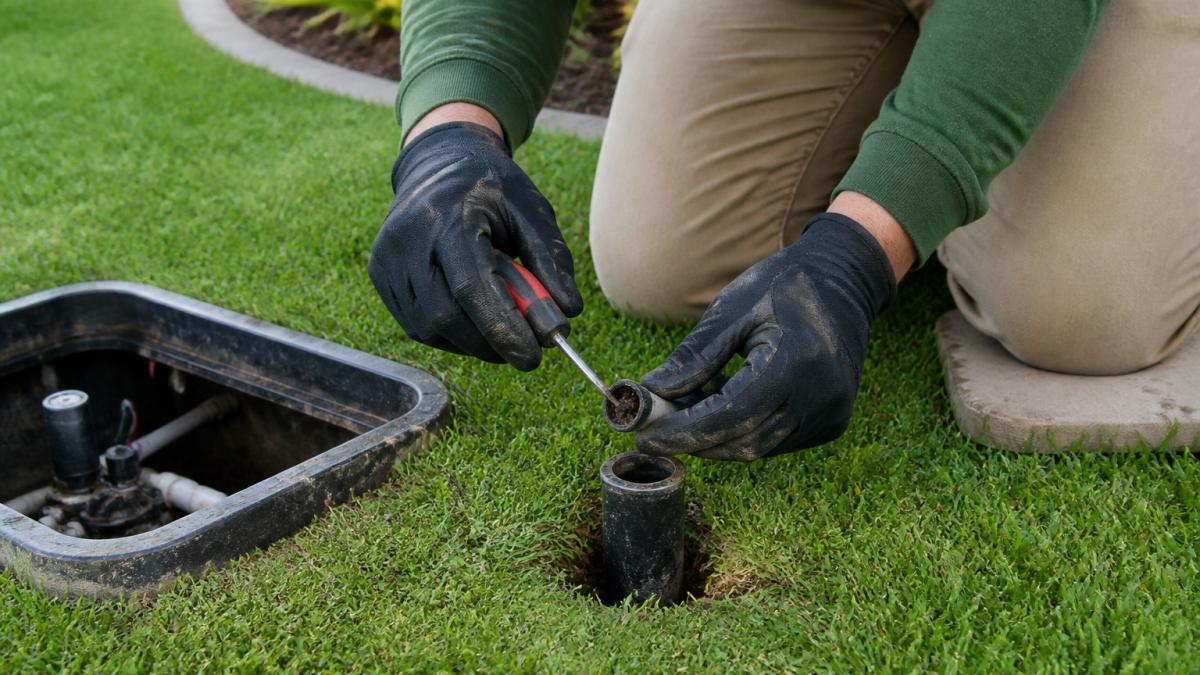
Start with the sprinkler heads:
- Unscrew each nozzle and rinse it under clear water
- Clear grit and grass clippings from the screen filter
- Check that heads sit level with the turf, not sunk or tilted
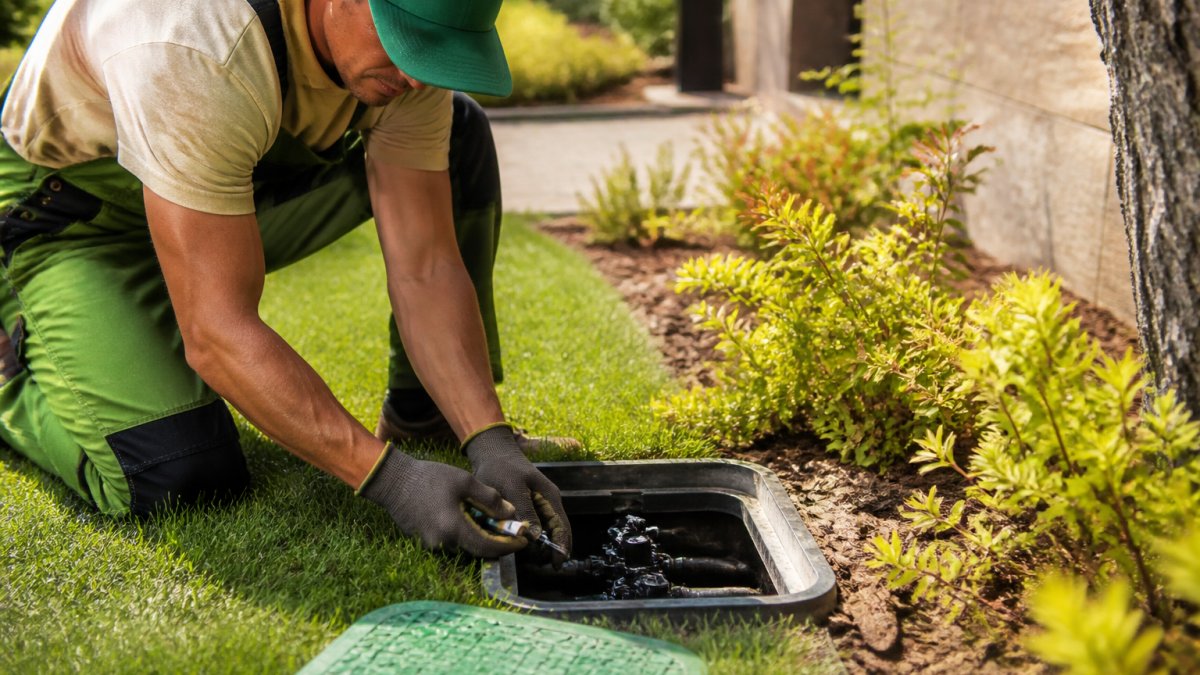
Then move to the valves. Open the valve box and look for standing water, which points to a bad solenoid or a loose fitting. Test wiring continuity at each solenoid with a multimeter.
For leaks, watch the water meter with every zone off. The United States Golf Association's preventive maintenance guidance notes that weekly observation of head rotation, leaks, and clogs catches most failures early, and the same habit works on a home lawn.
Irrigation System Water Efficiency Tips That Cut Waste
Water efficiency comes down to three controls: how long you run, when you run, and how evenly water lands. Fix those and you cut waste without starving the turf. But efficiency advice is only persuasive when you can see what it saves, and when you know which fixes are worth doing yourself versus calling in a pro.
The efficiency moves that matter most
- Water early morning, before sun and wind steal the spray
- Set separate run times for sun and shade zones
- Fix head-to-head coverage so spray patterns overlap evenly
A system audit measures how evenly water lands. If one zone soaks the sidewalk while another stays dry, you are paying for water that never reaches the roots.
Estimate your water savings before you spend
You do not need a lab to estimate ROI. Use your own bill and a few measurements:
- Read your water meter before and after a typical irrigation cycle to get gallons per cycle.
- Multiply by cycles per week and weeks per season to get seasonal gallons.
- Compare that figure to the same property's usage after a tune-up (fixed leaks, matched nozzles, corrected schedule).
- Multiply the gallon difference by your local water rate to get dollar savings per season.
A common pattern is that leak repair and schedule correction deliver the largest savings per dollar spent, while nozzle replacement and smart-controller upgrades deliver steady savings over multiple seasons. Use your own meter readings rather than national averages, water rates vary widely by utility.
DIY vs. professional: where to draw the line
Not every efficiency fix needs a pro. Use this threshold:
Do it yourself if:
- A nozzle is clogged, cracked, or misaligned
- A schedule needs adjusting for season or weather
- A rain sensor needs a threshold change or a battery swap
Call a professional if:
- The water meter moves with every zone off (a hidden leak)
- A zone will not pressurize after cleaning
- Wiring, solenoids, or the controller itself misbehaves
A backflow preventer protects your drinking water, and testing it usually requires a certified tester. That is not a DIY job. The same goes for buried pipe repairs and valve wiring, the labor saved is rarely worth the risk of a bigger break.
For more on cutting waste across your whole yard, our team shares deeper guidance in Beyond the ordinary.
Drip Irrigation Troubleshooting Guide for Clogged Emitters and Low Pressure
A drip irrigation troubleshooting guide should start with the simplest cause: a clogged emitter. Drip lines clog from minerals, grit, and algae, and low pressure often traces back to a clogged filter or a leak upstream.
Work through these steps:
- Flush the line by removing the end cap and running water for a minute
- Clean or replace the filter screen at the valve
- Check each clogged emitter and clear it with a thin wire
- Look for kinked tubing or crushed sections under mulch
- Test flow rate at the farthest emitter to confirm pressure
- Check the pressure regulator if the whole zone runs weak
Low pressure at the end of a long run usually means the line is too long or the tubing is too narrow. Split the zone into two shorter runs and pressure evens out.
Program Smart Controllers and Adjust Schedules by Season
A smart irrigation controller adjusts run times based on weather, soil moisture, and evapotranspiration (ET), the combined water loss from soil and plants. That means fewer wasted cycles and less guessing, but only if the sensors are calibrated and the zones are programmed correctly. Most guides stop at "connect the weather source." The calibration steps below are where the real water savings live.
Step 1: Enter the site profile accurately
- Soil type: sandy soil holds less water than clay, so sandy zones need shorter, more frequent runs
- Plant type: turf, annual beds, shrubs, and drip zones each have different ET coefficients
- Sprinkler head type: spray heads apply water faster than rotors, so run times differ even on the same soil
If the site profile is wrong, every downstream calculation is wrong. Enter it once, carefully, and revisit it if you change heads or plantings.
Step 2: Calibrate the rain sensor
A rain sensor should suspend irrigation after measurable rainfall and resume once the collector dries out. Calibrate it by:
- Setting the threshold to match local rainfall patterns (common settings are 1/8, 1/4, or 1/2 inch)
- Testing with a cup of water poured into the collector to confirm the controller skips the next cycle
- Checking the sensor is mounted where it receives direct rainfall, not under an eave or tree canopy
A rain sensor that trips at the wrong threshold either wastes water (too high) or starves the turf (too low). Test it at the start of each season.
Step 3: Calibrate the freeze sensor
A freeze sensor prevents irrigation when temperatures drop near freezing, protecting both plants and pipes. Set the threshold based on the plants you grow, tropicals and tender annuals need protection at higher temperatures than cool-season turf. Test it by placing the sensor in ice water and confirming the controller suspends the cycle.
Step 4: Calibrate soil moisture sensors
Soil moisture sensors are the most powerful and most misconfigured smart-tech add-on. Calibrate by:
- Installing the probe at root depth, not at the surface where it dries first
- Taking a baseline reading after a thorough soak and again after several dry days
- Setting the "pause" threshold so the controller skips irrigation while soil is still moist
A sensor set too wet wastes water; set too dry, it defeats the purpose. The baseline readings are the only way to know which you have.
Step 5: Program zone schedules and seasonal adjustment
- Set separate schedules for turf, beds, and drip zones
- Enable seasonal adjustment so run times shift with ET rather than a fixed calendar
- Use cycle-and-soak on slopes and clay soils to let water infiltrate
A smart controller only saves water if the zones and sensors are set up right. Program it once with care, then let the monthly log review catch drift before it shows up as a brown patch.
Know When to Call a Professional for Irrigation System Maintenance
Call a professional when the problem is underground, electrical, or repeated. DIY work covers nozzles, filters, and schedule tweaks. Buried pipe breaks, valve wiring, and backflow issues need a trained eye.
Call for help when you see:
- A water bill jump with no change in schedule
- A zone that will not pressurize after cleaning
- Standing water over a valve box
A backflow preventer protects your drinking water, and testing it usually requires a certified tester. That is not a DIY job.
If you would rather hand off the whole system, our team handles full irrigation service, from audits to repairs.
Schedule a Professional Irrigation Inspection With Roadrunner Yard Maintenance
A proactive inspection catches the small failures before they turn into dead turf and high bills. That is the difference between reacting to problems and preventing them.
At Roadrunner Yard Maintenance, we bring a full-service approach to every property.
Ready to stop chasing sprinkler problems? Contact us to book an inspection and get your system mapped, tuned, and running right.
Frequently Asked Questions
How often should a professional inspect my irrigation system?
The EPA recommends monthly inspections of an irrigation system, and Utah State University Extension advises a full check in spring plus at least monthly during the growing season. A practical schedule is a complete system audit in spring, quick visual checks each month, and a full inspection before winter. Regular irrigation system maintenance catches clogged nozzles, misaligned heads, and small leaks before they waste water or damage turf, and it keeps every zone delivering even coverage across your landscape.
How do I winterize my irrigation system to prevent pipe damage?
Shut off the water supply at the main valve, then blow compressed air through each zone with a properly sized compressor to clear water from pipes, valves, and sprinkler heads. Open manual drain valves if your system has them, and insulate the backflow preventer. Work zone by zone and never exceed the manufacturer's recommended pressure. Skipping winterization leaves water in the lines to freeze and crack pipes, valves, and heads, which turns a routine seasonal task into a costly pipe repair job in spring.
How can I improve the water efficiency of my existing sprinkler setup?
Start with a system audit to check head-to-head coverage and fix overspray onto pavement. Replace worn nozzles, install a rain sensor and smart controller, and split your landscape into irrigation zones by plant type and sun exposure. Water early in the morning to reduce evaporation, and adjust the schedule monthly using local evapotranspiration data. These irrigation system water efficiency tips typically cut waste noticeably, and a smart controller with soil moisture sensing can hold back watering after rain.
What are the signs that my sprinkler system needs professional repair?
Watch for geysers or bubbling spots in the lawn, dry patches that stay dry after watering, sprinkler heads that stop rotating, constantly wet areas, and a water bill that jumps without a schedule change. Low pressure across a zone can point to a failing solenoid, a stuck valve, or a break in the lateral line. If you have checked for clogs and adjusted the controller and the problem persists, a professional can test wiring continuity, flow rate, and valve operation to find the cause.
Your irrigation system will only perform as well as its last inspection. Small leaks, clogged heads, and stale schedules quietly drain water and money all season. Roadrunner Yard Maintenance can take that off your plate with proactive irrigation service, seasonal cleanups, and custom landscape care tailored to your property. Get started with Roadrunner Yard Maintenance and keep your system running efficiently all year.