 Listicle
Drought-Tolerant Plants for Albuquerque: 12 Options That Thrive
Last Updated: November 26, 2026
Quick Summary
The best drought tolerant plants for Albuquerque are regionally adapted species such as Apache plume, desert willow, chamisa and blue grama grass, which handle heat, wind and poor soil. Starting with native or regionally adapted species generally means less supplemental water and fewer soil amendments.
- Start with native or regionally adapted species before trying imports.
- Apache plume and desert willow tolerate heat and sun with little watering once established.
- Check drainage before planting, since many city yards have compacted or fast-draining soil.
- Water new plants deeply two to three times a week in the first month, then taper.
- Keep trees at least 10 feet from foundations and check mature canopy spread before planting.
Table of Contents
- Which Drought Tolerant Plants Grow Best in Albuquerque?
- Quick Comparison: Water Needs and Sun Requirements
- Albuquerque Xeriscape Plants: Shrubs, Grasses and Perennials
- Drought-Tolerant Trees for Albuquerque Yards
- Drought-Tolerant Plants for Full Sun Exposures
- How to Establish Drought-Tolerant Plants in Your First Season
- Booking a Water-Wise Planting Plan with Roadrunner
- Frequently Asked Questions
Albuquerque sits in a high desert where summer heat, low rainfall and alkaline soil punish thirsty landscapes. Choosing drought tolerant plants that already handle those conditions is the fastest way to a yard that survives July without constant watering. At Roadrunner Yard Maintenance, we design and maintain drought-tolerant landscapes, and the plants below are a practical place to start. Expect a practical shortlist, not a catalog of every option.
Drought-tolerant landscaping, often called xeriscaping, means choosing plants whose root systems and leaf structures suit dry conditions. A well-planned xeriscape can reduce irrigation needs once plants are established.
Which Drought Tolerant Plants Grow Best in Albuquerque?
The best drought-tolerant plants for Albuquerque are regionally adapted species that handle heat, wind and poor soil. Regionally adapted species such as Apache plume, desert willow, chamisa and blue grama grass are common starting points for high-desert gardens.
Start with native or regionally adapted species before trying imports. Plants from similar high-desert climates generally need less supplemental water and fewer amendments. Apache plume, a shrub with white flowers and feathery seed heads, tolerates heat and sun. Desert willow adds spring flowers and filtered shade without demanding heavy watering.
Where you plant matters as much as what you plant. Check drainage before you commit, since many yards in the city have compacted or fast-draining soil.
Our crew at Roadrunner Yard Maintenance often recommends that homeowners plan a water-wise layout before buying plants, so each species gets the exposure and spacing it needs.
Quick Comparison: Water Needs and Sun Requirements
The table below summarizes the plants covered in this guide. Water and sun notes reflect general xeriscape practice; confirm specifics with a local nursery before buying.
| Plant | Type | Water Needs | Sun Requirement | Best Use |
|---|---|---|---|---|
| Apache Plume | Shrub | Very low once established | Full sun | Screening, mixed beds |
| Desert Willow | Tree | Low to moderate | Full sun | Shade, spring color |
| Four O'Clock | Perennial | Low | Full sun to part shade | Border color |
| Blue Grama Grass | Grass | Very low | Full sun | Lawn alternative |
| Chamisa (Rabbitbrush) | Shrub | Very low | Full sun | Fall color, pollinators |
| Penstemon (Beardtongue) | Perennial | Low | Full sun | Spring blooms |
| Desert Marigold | Perennial | Very low | Full sun | Ground cover, color |
| Banana Yucca | Succulent | Very low | Full sun | Structure, texture |
| Sage (Salvia) | Perennial | Low | Full sun | Fragrant borders |
Hardiness varies by species and variety, so match each plant to your yard's sun exposure before you buy.
Albuquerque Xeriscape Plants: Shrubs, Grasses and Perennials
For a full xeriscape bed, combine shrubs for structure, grasses for movement and perennials for seasonal color. Blue grama grass, penstemon and chamisa cover all three roles in a low-water design.
Blue grama grass works as a lawn alternative in many Albuquerque yards and needs little supplemental water once established. Penstemon brings spring blooms, and chamisa provides late-season yellow flowers that draw pollinators.
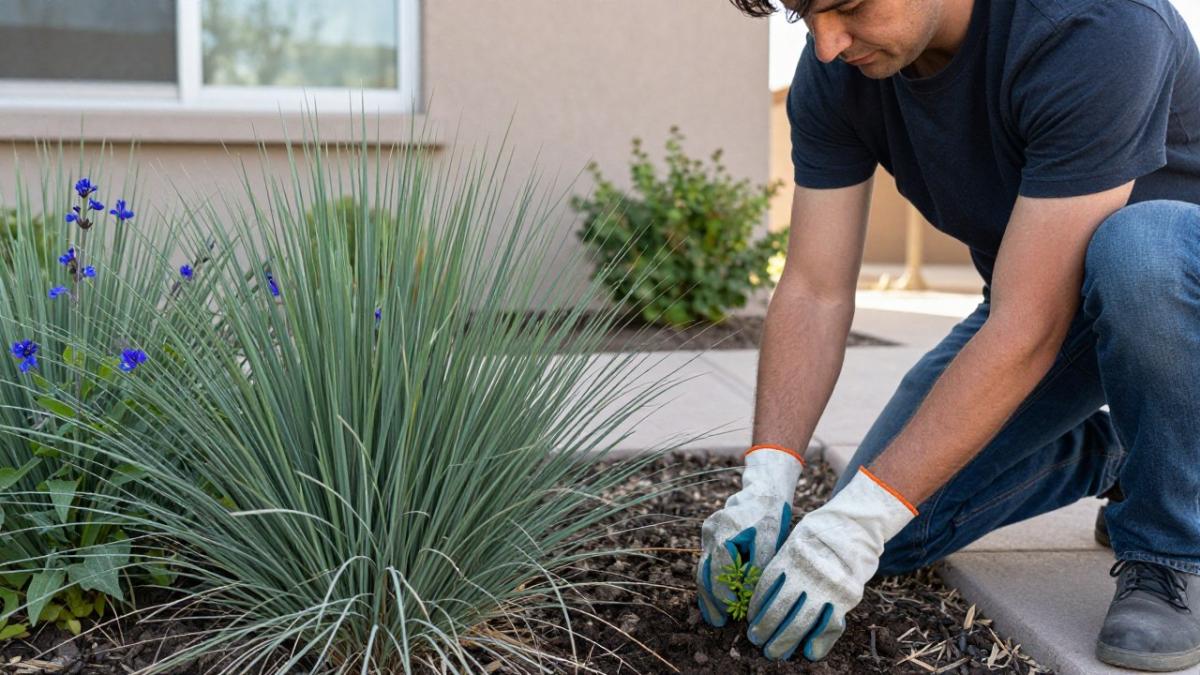
Sage, a salvia species, adds fragrance to borders. See how to design a custom xeriscape layout that places shrubs, grasses and perennials for a desert yard. Hardiness varies by variety, so confirm the exact type with your nursery. Plant grasses and perennials in groups rather than single specimens, which creates a more natural look and reduces wasted space.
Drought-Tolerant Trees for Albuquerque Yards
Trees take longer to establish than shrubs or perennials, but a well-chosen tree provides shade that lowers the temperature around your home and reduces water loss from nearby plants. Desert willow is one option for yards here, and mature size should drive the decision as much as water use.
Desert willow (Chilopsis linearis) is a generally sized tree with spring and summer flowers and a loose, airy canopy that casts filtered shade. It handles reflected heat from walls and pavement well. For a smaller footprint, consider a native or regionally adapted selection that stays under 15 feet, and confirm the mature height and spread with your nursery before buying, because named varieties vary widely.
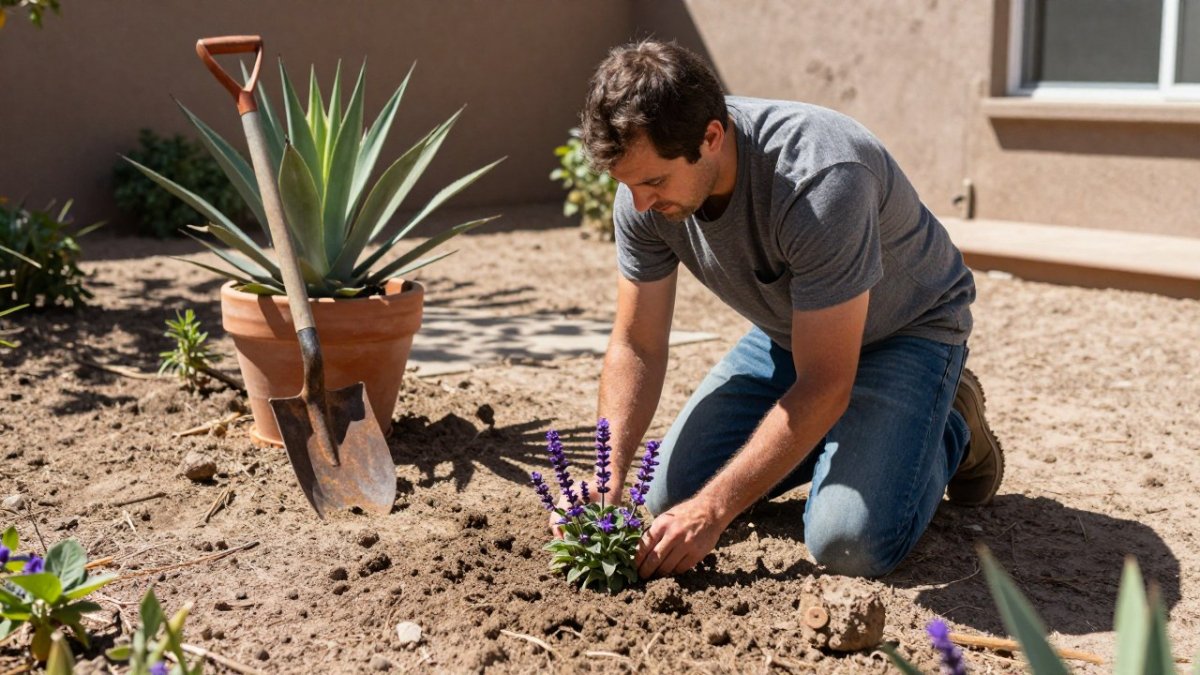
Plant trees in fall or early spring when temperatures are mild and roots can grow before summer heat. Dig the hole two to three times as wide as the root ball but no deeper than the root ball itself, and keep the root flare at or slightly above grade. Water deeply and less often during the first two growing seasons, so roots reach down rather than staying near the surface.
Spacing is where most tree plantings go wrong. Keep trees at least 10 feet from foundations and 15 to 20 feet from utility lines for medium trees, and check the expected canopy spread so the mature tree does not crowd a wall, driveway or patio. A tree that looks small in a 5-gallon pot can double or triple in width within a decade. Watch out: planting a fast-growing shade tree close to a wall for quick relief usually means root and canopy conflicts within a few years, and removing a mature tree costs far more than choosing the right size at planting.
Mulch a ring 2 to 3 inches deep around the base, pulled back a few inches from the trunk, to slow evaporation and moderate soil temperature. Avoid piling mulch against the trunk, which traps moisture and invites rot. In windy exposures, stake only if the tree cannot stand on its own, and remove stakes after the first growing season so the trunk develops strength.
Drought-Tolerant Plants for Full Sun Exposures
Full sun is the norm across much of Albuquerque, which narrows the field to species that thrive under strong light and high heat. Many of the plants in the comparison table are suited to full sun, including Apache plume, banana yucca and desert marigold.
Full-sun beds dry out faster than shaded ones, so mulch heavily with gravel or wood chips to slow evaporation. Group plants with similar water needs together, which simplifies irrigation.
A common mistake is planting shade-loving species in full sun. Leaves scorch, growth stalls and the plant often dies within a season. Check the sun requirement on the tag before you buy.
How to Establish Drought-Tolerant Plants in Your First Season
Establishment is where most drought-tolerant plantings succeed or fail. A plant labeled "very low water" once established still needs consistent moisture in its first year or two while roots spread into surrounding soil. The single biggest mistake is treating a new xeriscape like a mature one and cutting water too soon.
Water new plants deeply two to three times a week in the first month, then taper to about once a week by the end of the first growing season. For more on irrigation practices that keep water use efficient, see our maintenance tips. Depth matters more than frequency: apply enough water to moisten the root ball and the soil immediately around it, typically 1 to 2 gallons for a 1-gallon nursery pot and 3 to 5 gallons for a 5-gallon pot at each watering. Drip irrigation delivers water to the root zone with less loss than overhead spray, and a simple battery timer removes the guesswork.
A practical first-season schedule looks like this:
- Weeks 1-4: water two to three times per week, checking that moisture reaches the full root ball.
- Weeks 5-12: water once or twice per week, lengthening the interval as new growth appears.
- Late summer through fall: water every 10 to 14 days, deeper but less often, to encourage roots to move downward.
- Second year: water every two to three weeks during the hot months, then rely on rainfall and occasional deep soakings once plants are visibly established.
Check soil moisture a few inches down before each watering rather than following a fixed calendar. Push a finger or a wooden dowel into the soil; if it comes out dry at 3 to 4 inches, it is time to water. Watch for wilting, leaf drop or browning edges, which often signal over- or under-watering. Watch out: overwatering in heavy or compacted soil is as lethal as drought, because roots suffocate and rot before the plant ever shows drought stress.
Trees need a longer runway than shrubs and perennials. Desert willow and other trees generally need deep, infrequent soakings for the first two growing seasons, with the interval stretched to every two to three weeks by the second summer. Establishment time varies by species; confirm expected timing with your nursery for the plants you choose.
Group plants by water need and put them on separate drip zones or emitters so you can taper each group on its own schedule. That one design choice does more for long-term survival than any individual plant selection.
Booking a Water-Wise Planting Plan with Roadrunner
If you want help choosing and placing these plants, Roadrunner Yard Maintenance can build a plan around your yard's sun, soil and water access. A landscape professional can help with layout, planting and an early watering schedule. Contact our team to request a quote and discuss your site.
Frequently Asked Questions
What plants grow well in Albuquerque?
Albuquerque's hot, dry summers, alkaline soils and wind favor plants adapted to low rainfall. Native and regionally adapted choices such as blue grama grass, penstemon, Apache plume and chamisa tend to handle these conditions well once established. Confirm each plant's hardiness and mature size before buying, since local nurseries stock varies by season. A landscape professional can help match plants to your specific exposure and soil.
What are the best plants for full sun and drought?
Plants that take full sun and little water include blue grama grass, penstemon, desert marigold and sage (Salvia), according to local and garden-center recommendations. Full sun exposures heat up quickly, so choose plants that tolerate reflected heat from walls and paving. Group plants with similar water needs together so you can irrigate them on one schedule. Check each variety's hardiness, since sage hardiness varies by type.
What is the most drought-resistant plant?
No single plant is the most drought-resistant for every site, because tolerance depends on root depth, sun exposure and soil. Native species recommended for New Mexico landscapes, including desert willow and banana yucca, are commonly cited for low-water performance. Compare candidates by mature size and water needs rather than relying on one ranking. Plant selection in your own yard matters more than any universal top pick.
How often should drought-tolerant plants be watered after planting?
Newly planted drought-tolerant plants need more frequent water during their first growing season than they will once established. Water deeply and less often as roots spread, usually over one to two seasons. Check soil a few inches down before each watering rather than following a fixed calendar. Adjust for wind, heat and soil type, and reduce water gradually once plants settle in.